West Coast US container ports experienced a strong increase in laden import volumes during the second quarter of 2026 as shippers accelerated cargo movements ahead of new U.S. tariff deadlines, although the gains were concentrated in Southern California rather than the Pacific Northwest.
Across the major North America West Coast (NAWC) container ports, 2026‑Q2 was defined by regulatory volatility, regional volume divergence, and empty container repositioning dynamics. Facing a hard July 24, 2026, deadline for new permanent trade tariffs following earlier judicial reversals, shippers front‑loaded inbound cargo into NAWC.
Major NAWC ports processed 3.7 million TEUs of laden imports, marking a robust Y/Y growth of 7.1%. This created a sharp May 2026 volume spike that was overwhelmingly absorbed by Los Angeles and Long Beach, offsetting laden import volume drops across the Pacific Northwest (PNW).
The quarter was also marked by pronounced intra‑quarter volatility. After opening on a soft note in April, the market hit a sharp inflection point in May, where total handled volumes surged by 12.7% and laden imports spiked by an extraordinary 19.8% Y/Y, as shippers sought to get goods through customs ahead of the July tariff deadlines; an effect that was amplified against a depressed May 2025 baseline (also due to 2025 tariffs deadlines).
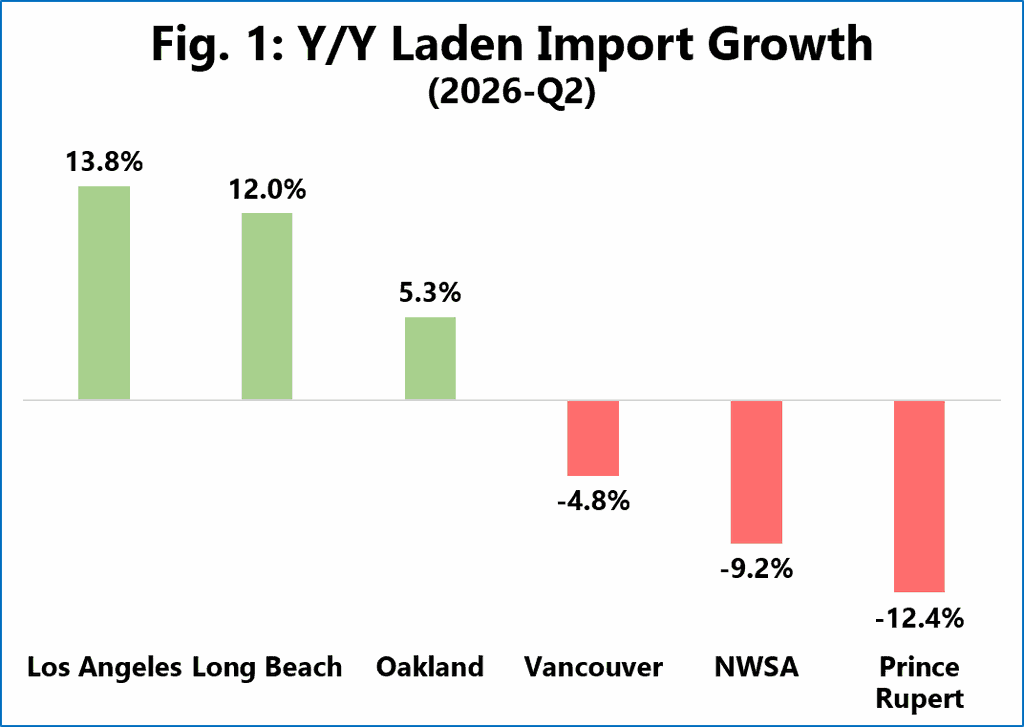
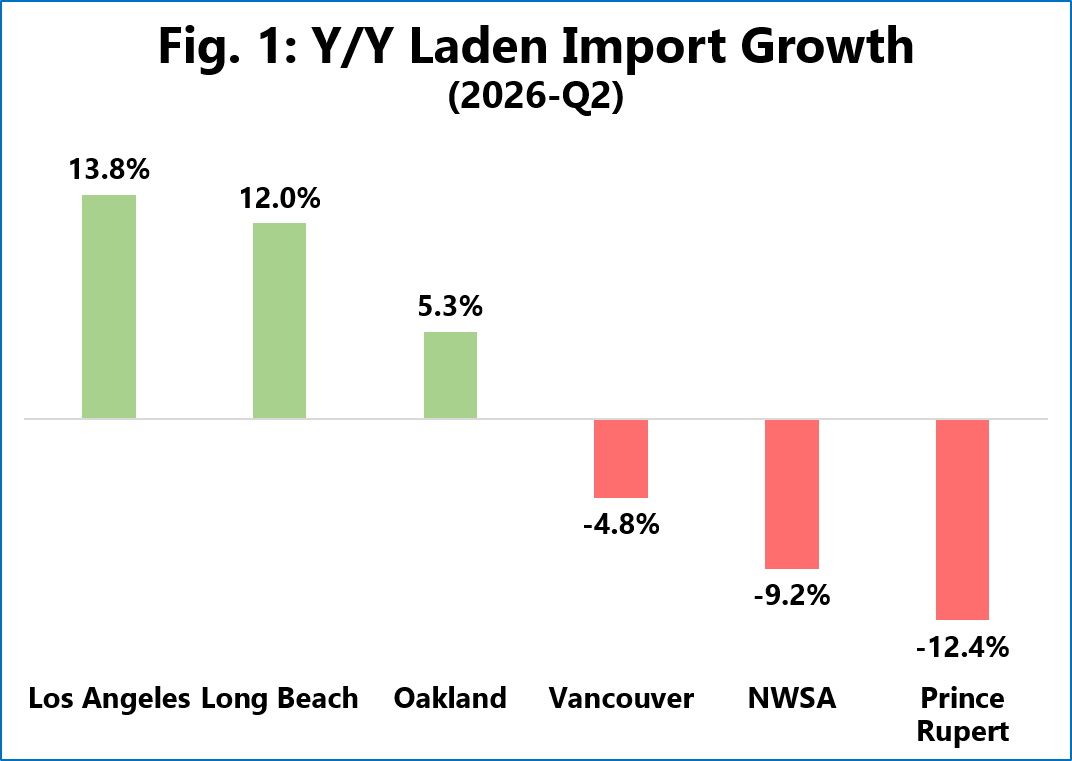
Figure B1 shows the Y/Y laden import volume growth for 2026‑Q2. As illustrated, the aggregate 7.1% coastal growth in laden imports is not the result of uniform regional performance. The ports of Los Angeles and Long Beach posted commanding Y/Y increases in laden imports of 13.8% and 12.0%, respectively.
This double‑digit surge highlights a strong routing preference to move discretionary cargo through Southern California. In stark contrast, the PNW corridor experienced inbound volume declines across all major ports. Vancouver mitigated its losses to a ‑4.8% drop, but the downturn steepened significantly for the Northwest Seaport Alliance (‑9.2%), while Prince Rupert suffered the most severe regional impact, plummeting ‑12.4%.
Source: Sea Intelligence