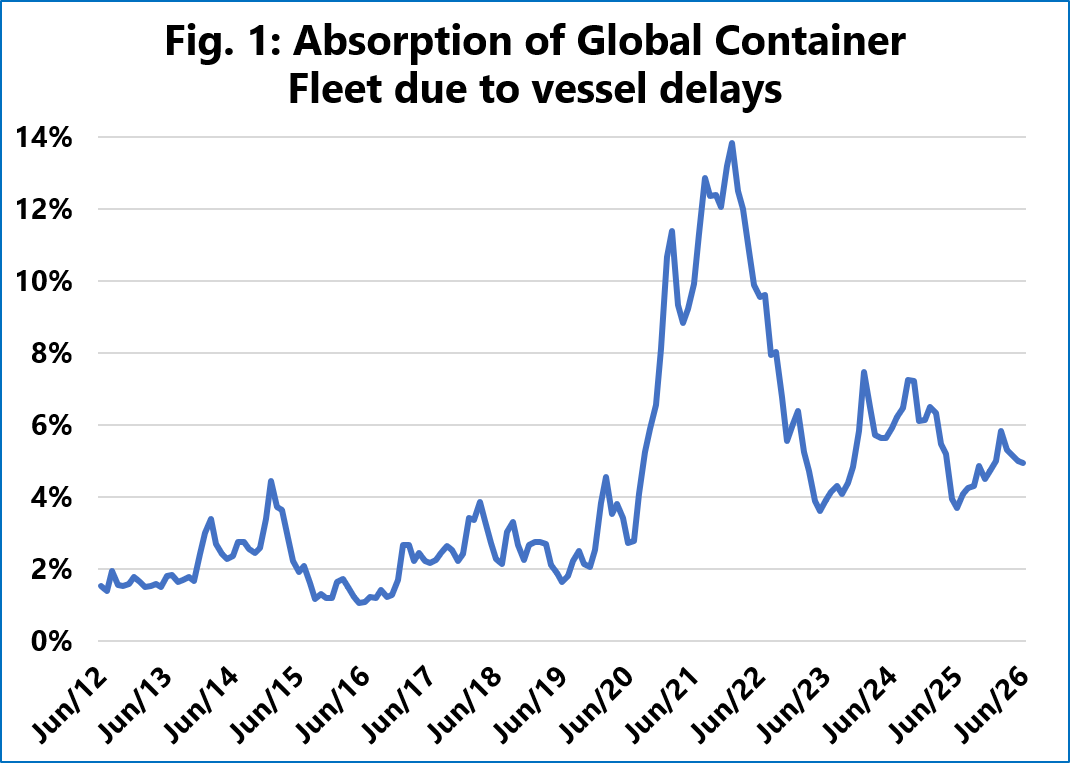
Almost two years after the global carriers started re-routing Asia–Europe services via the Cape of Good Hope to avoid Houthi attacks in the Red Sea, some Far East–Europe loops still remain understaffed.
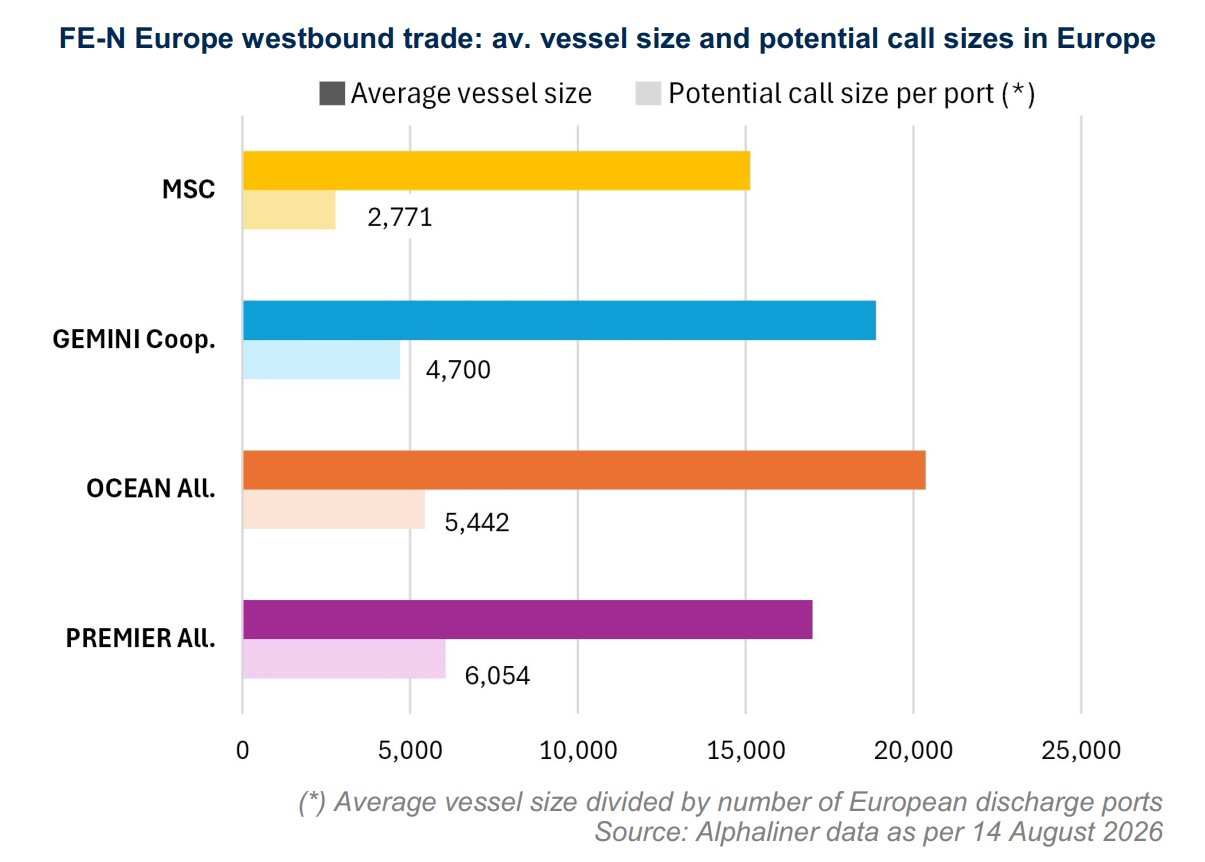
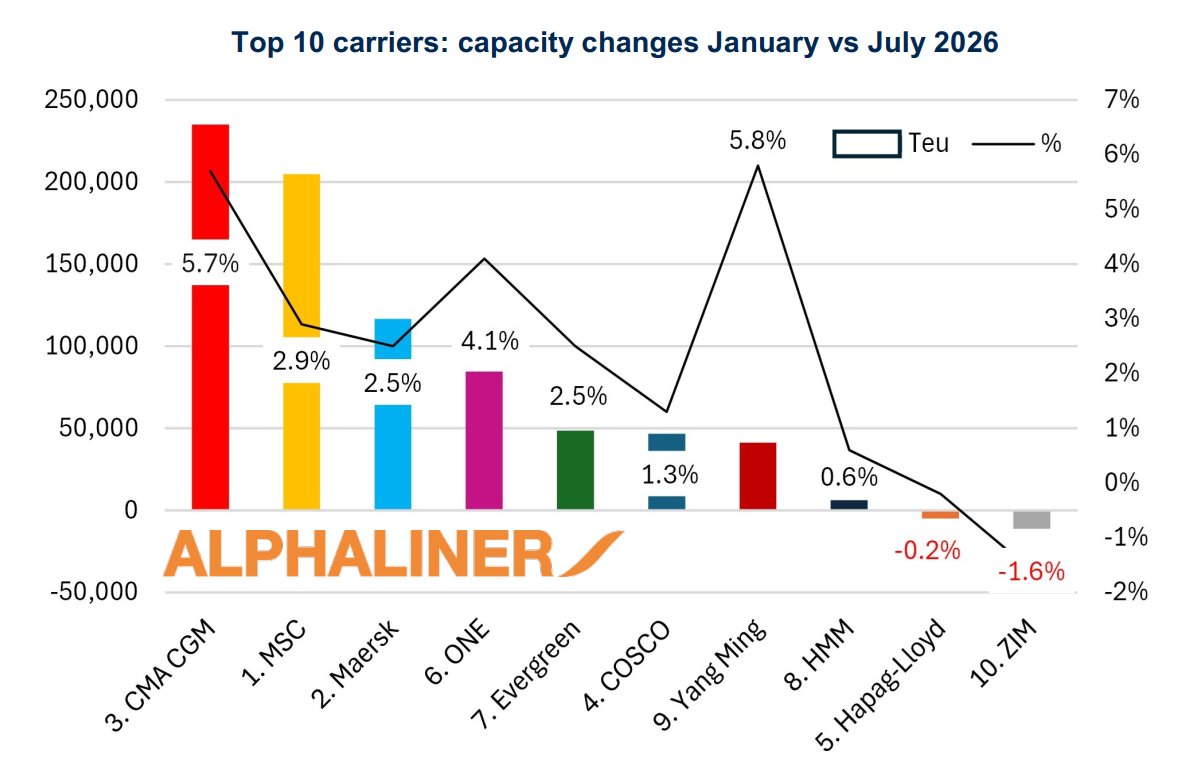
Alphaliner data shows that the nine biggest liner operators currently need 461 vessels to fully staff all 31 Far East–Europe liner services operated by OCEAN Alliance ( cmacgm , COSCOSHIPPING and Evergreen), Gemini Cooperation ( Maersk and HapagLloydAG ), Premier Alliance ( OceanNetworkExp , HMM and Yang Ming), and MSCCargo.
A count on 14 September, before carriers start blanking voyages for the Chinese Golden Week holiday (1-8 October), however revealed that ‘only’ 425 ships were deployed. This means that trade is currently missing 36 vessels that would be needed to guarantee ‘uninterrupted’ weekly sailings on the aforementioned 31 services.
With an extremely small idle fleet and the complete absence of ‘big’ vessels from the spot charter market, some carriers have no way of filling those gaps. Last summer, this shortage of tonnage pushed spot ocean freight rates from China to North Europe to a level that the market otherwise only witnessed during the COVID-19 pandemic.
Despite the fact that the Red Sea crisis remains far from resolved, and that there is a continuous lack of tonnage, this effect on freight rates has completely evaporated. Spot rates from Shanghai to North Europe have declined 45% over the past ten weeks, with double digit decreases in the last three weeks. This clearly hints at a rate war between some of the major operators.
We use cookies on our website to give you the most relevant experience by remembering your preferences and repeat visits. By clicking “Accept”, you consent to the use of ALL the cookies.
This website uses cookies to improve your experience while you navigate through the website. Out of these, the cookies that are categorized as necessary are stored on your browser as they are essential for the working of basic functionalities of the website. We also use third-party cookies that help us analyze and understand how you use this website. These cookies will be stored in your browser only with your consent. You also have the option to opt-out of these cookies. But opting out of some of these cookies may affect your browsing experience.
Necessary cookies are absolutely essential for the website to function properly. This category only includes cookies that ensures basic functionalities and security features of the website. These cookies do not store any personal information.
Any cookies that may not be particularly necessary for the website to function and is used specifically to collect user personal data via analytics, ads, other embedded contents are termed as non-necessary cookies. It is mandatory to procure user consent prior to running these cookies on your website.