Container shipping capacity among mid-sized liner operators showed mixed movements over the past year, reflecting sanctions impacts and evolving network strategies.
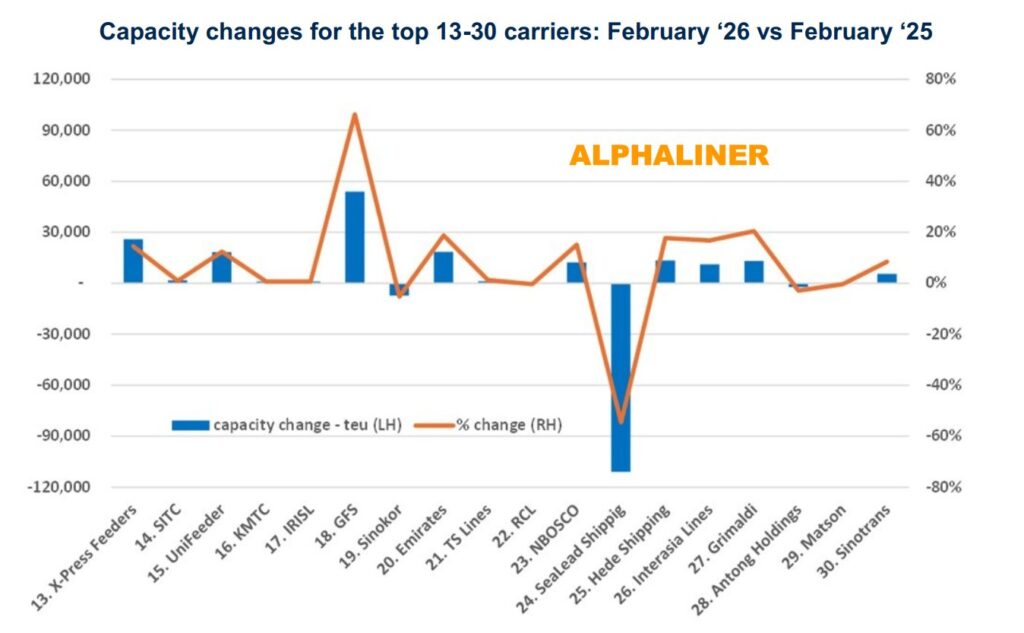
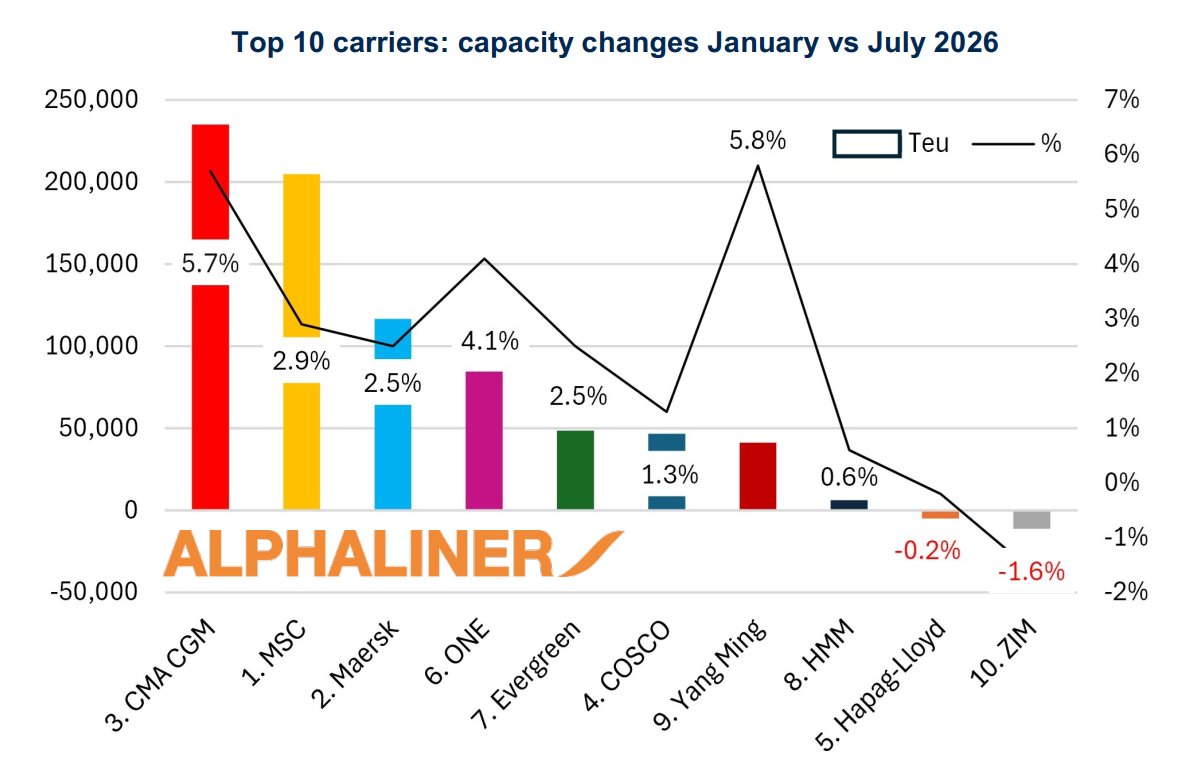
Тhe aggregate operated capacity of the eighteen medium-sized carriers, ranked 13-30 in Alphaliner’s Top 100, increased by a modest 2.7% over the past twelve months. These operators added about 56,000 teu to their fleets, bringing their combined operated slots to 2.1 Mteu as of 1 February 2026.
This accounts for 6.2% of the world liner fleet. By comparison, the growth of the global fleet in this period stood at 6.4%, or in nominal capacity terms, an addition of over 2.0 Mteu.
Singapore-based SeaLead Shipping, which in previous years saw rapid expansion and surged to 13th place, declined most significantly this past year, shedding approximately 110,000 teu. A major driver was the July 2025 sanctioning of 22 container ships by the US Office of Foreign Assets Control (OFAC), 16 of which were part of SeaLead’s operated fleet at the time.
The carrier reacted swiftly by terminating charters for these vessels, which accounted for about two-thirds of its overall loss. Further network rationalization, following the withdrawal of several standalone and joint loops, shed another 30,000 teu slots, resulting in a hard slide to 24th place. By contrast, exploring new corridors, SeaLead has since entered the China-Mexico trade through a multi-carrier partnership and launched a joint intra-Asia loop.
Continued demand, particularly in the Mediterranean, Middle East and India bolstered the fleets of the three largest common feeder operators: X-Press Feeders, DP World’s Unifeeder and AD Ports Group-controlled Global Feeder Shipping (GFS).
Source: Alphaliner