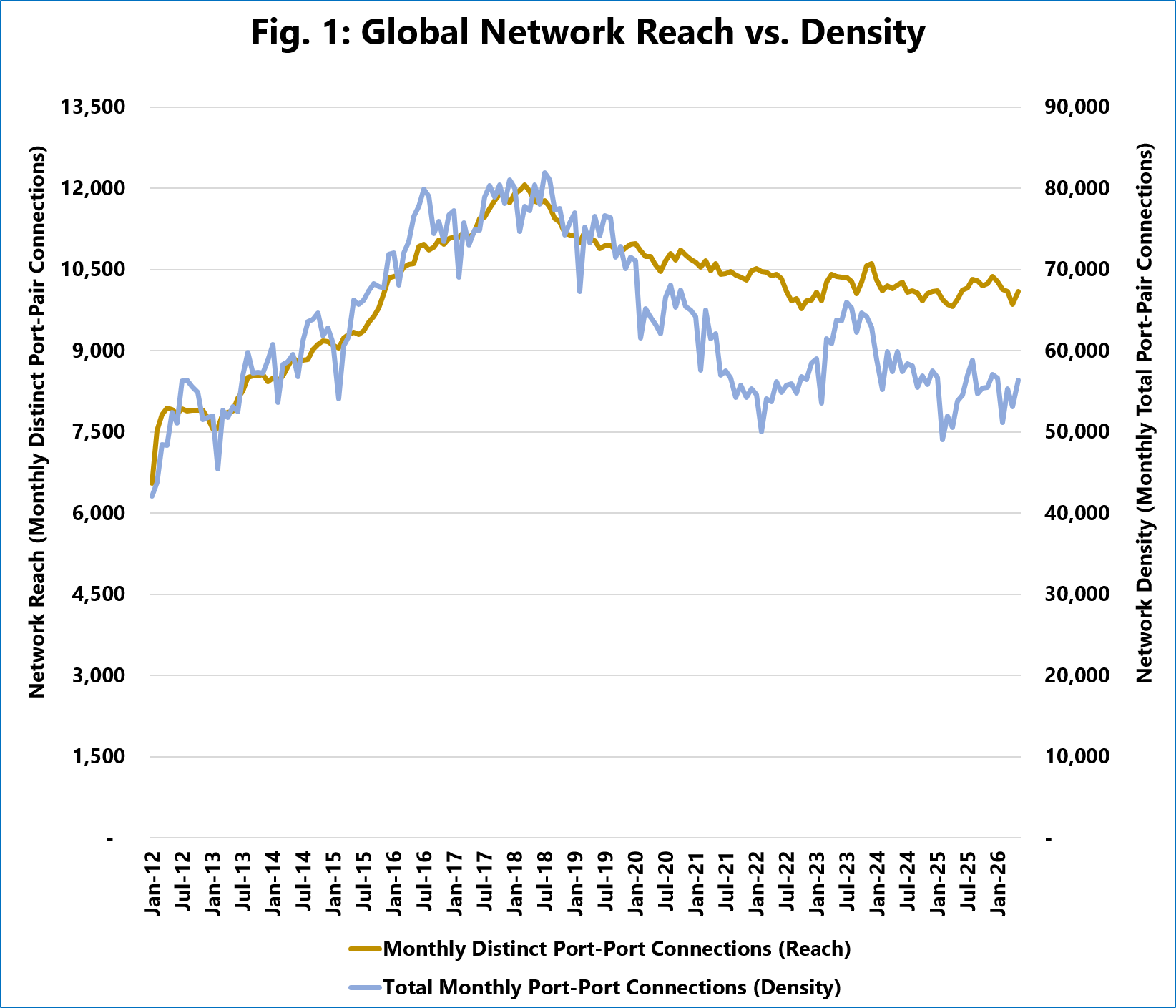
Container port reliability is increasingly under pressure at mega container hubs, where the operational challenge is no longer scale but complexity — with rising connectivity eroding schedule performance, as highlighted by Sea-Intelligence.
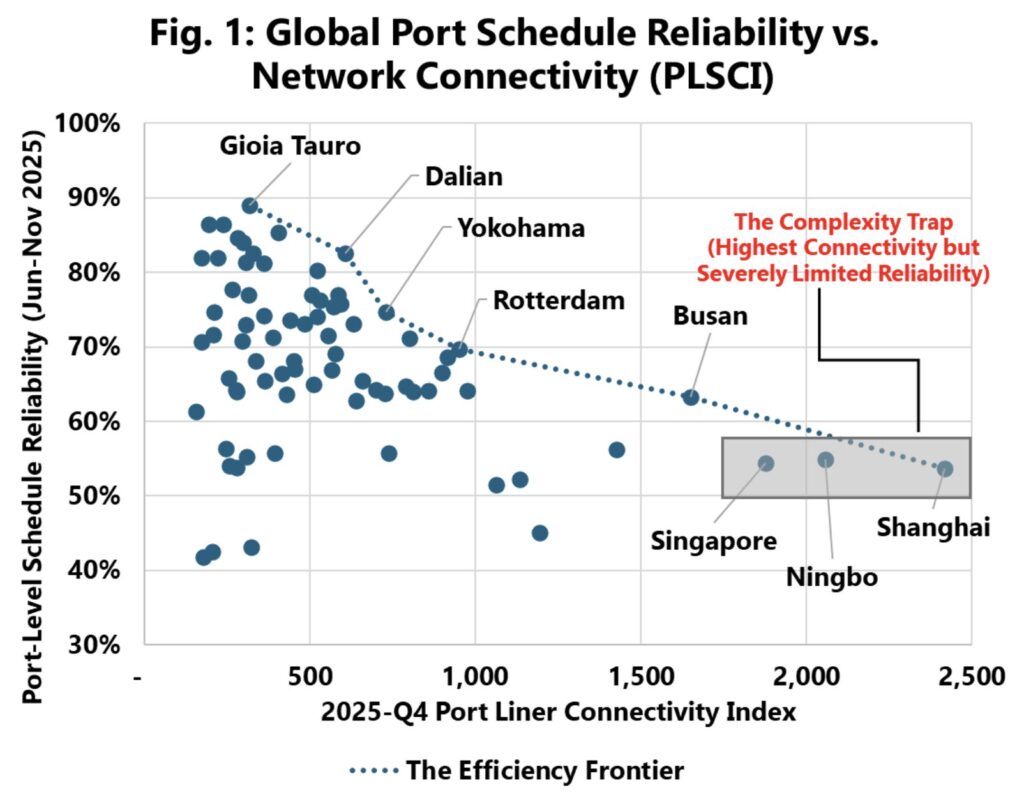
Using UNCTAD’s Port Liner Shipping Connectivity Index (PLSCI) and port-level schedule reliability data for mid-2025, the analysis highlights a non-linear relationship between connectivity and performance.
At the extreme end of the connectivity spectrum, the world’s largest mega-hubs — including Shanghai, Singapore and Ningbo — cluster tightly around reliability levels in the mid-50% range. Despite vast scale and global reach, these hubs appear constrained by a structural “reliability ceiling”.
By contrast, a group of highly efficient mid-tier gateways emerges as an operational sweet spot. Ports such as Dalian and Rotterdam combine strong global connectivity with significantly higher schedule reliability, often 15–20 percentage points above that of the mega-hubs.
These ports sit on what Sea-Intelligence describes as the industry’s “efficiency frontier”.
The data also sheds light on the rise of so-called diversion hubs in regions such as Southeast Asia, India and Mexico, which have benefited from shifting trade flows in recent years.
While ports like Vung Tau and Mundra outperform the largest hubs on reliability, they have yet to match the efficiency leaders — suggesting further operational optimisation is still possible.
For cargo owners and supply chain planners, the implications are increasingly tangible.
Maximising network breadth via the largest hubs does not necessarily deliver the best service outcomes. In some cases, routing cargo through slightly less complex but more reliable gateway ports may result in materially better on-time performance, even if overall connectivity is marginally reduced.
Source: Sea-Intelligence