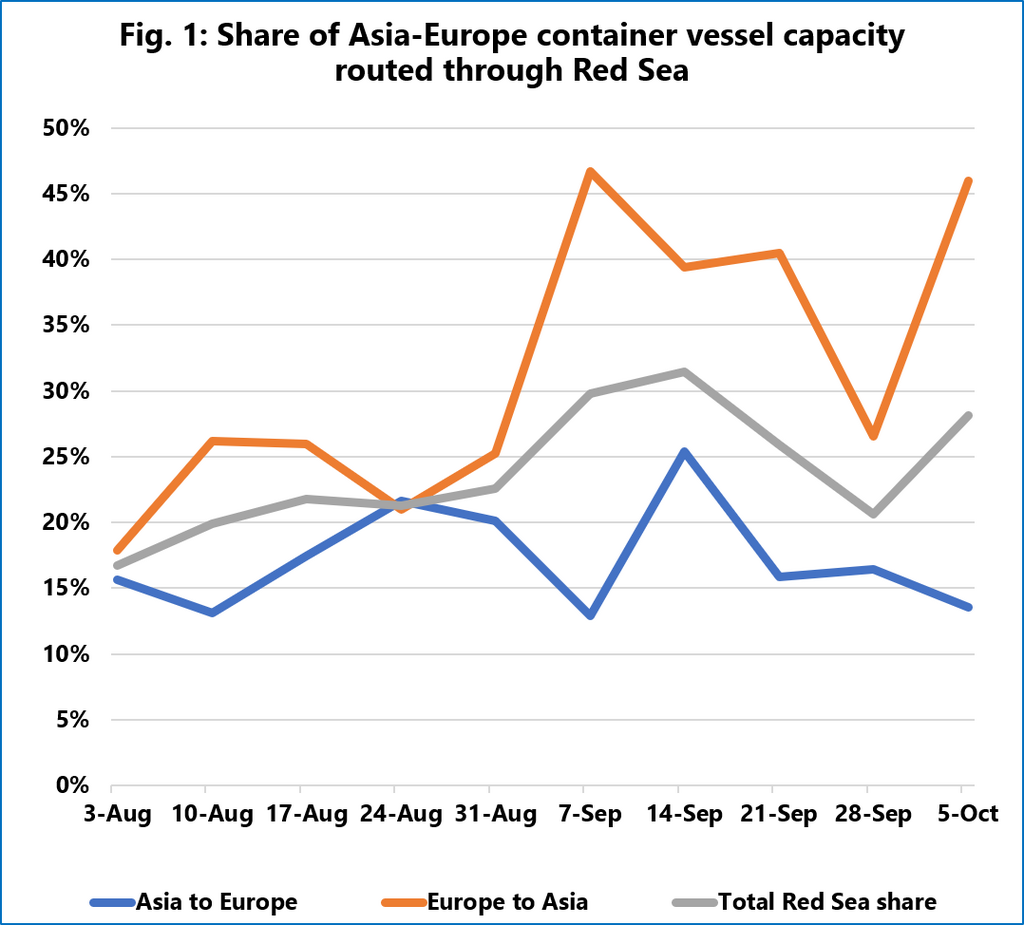
Red Sea routing normalisation reached 27% in September as container shipping lines continued a gradual return to the Suez Canal, according to the latest Sunday Spotlight commentary from Sea-Intelligence.
In Issue 782, Sea-Intelligence used its Trade Capacity Outlook data to track the Asia-Europe container vessels that have recently sailed through the Red Sea or are scheduled to do so in the coming weeks. The data provides a clearer picture of how carriers are moving away from the round-Africa routing that became standard following the start of the Red Sea crisis in December 2023.
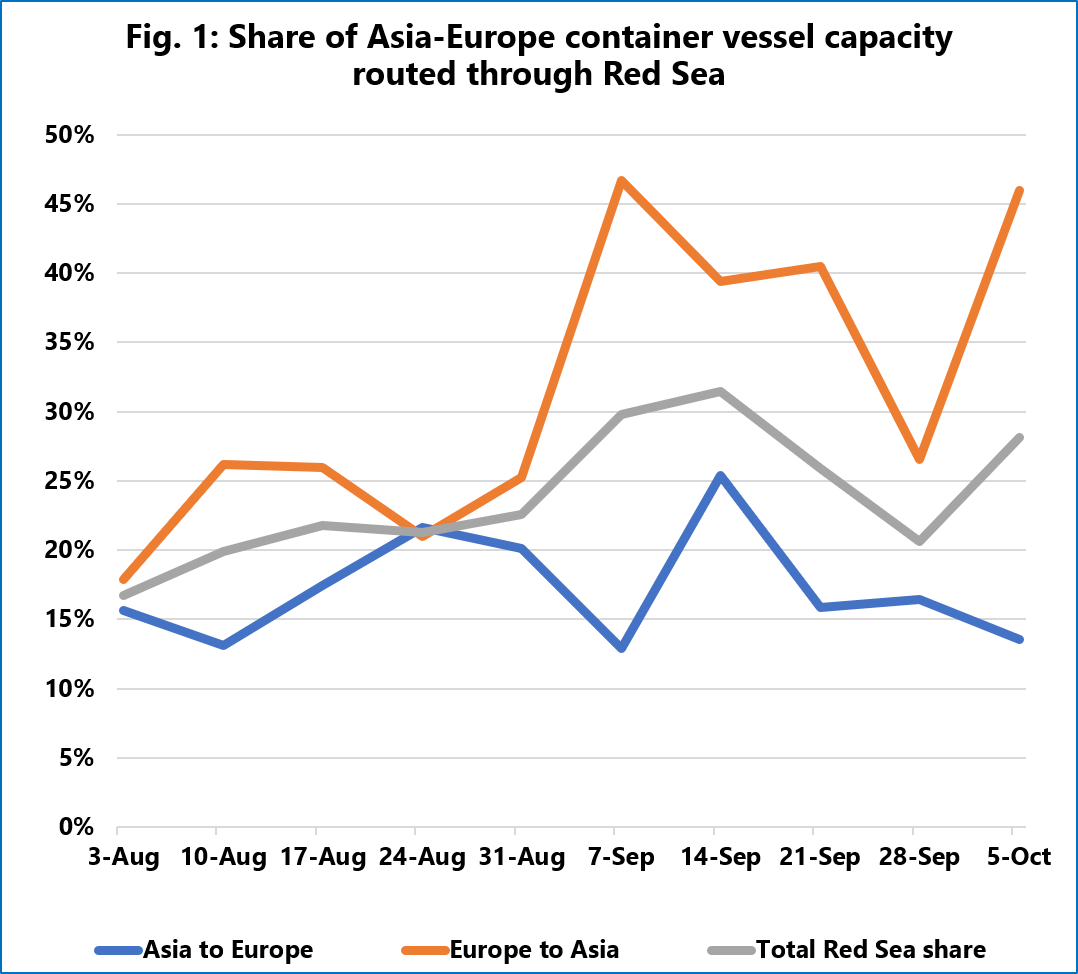
The return remains markedly different depending on direction. On the Asia-to-Europe head-haul, the share of capacity routed through the Red Sea and Suez Canal has remained relatively stable at 13–25%. On the Europe-to-Asia back-haul, however, shipping lines increased the share routed through Suez from 18–26% in August to 25–47% in September. Averaged across both directions for September, Sea-Intelligence calculates overall Red Sea routing normalisation at 27%.
The data also shows a stronger return through the Red Sea for services connecting the Mediterranean with Asia. These services reached a 57% Red Sea share in September, compared with 27% for vessels sailing from North Europe.
Sea-Intelligence links this back-haul emphasis to carriers repositioning vessel capacity towards Asia following recent congestion and delays at Asian hubs. Prioritising Mediterranean departures also allows shipping lines to focus on vessels with the shortest return time to Asia.