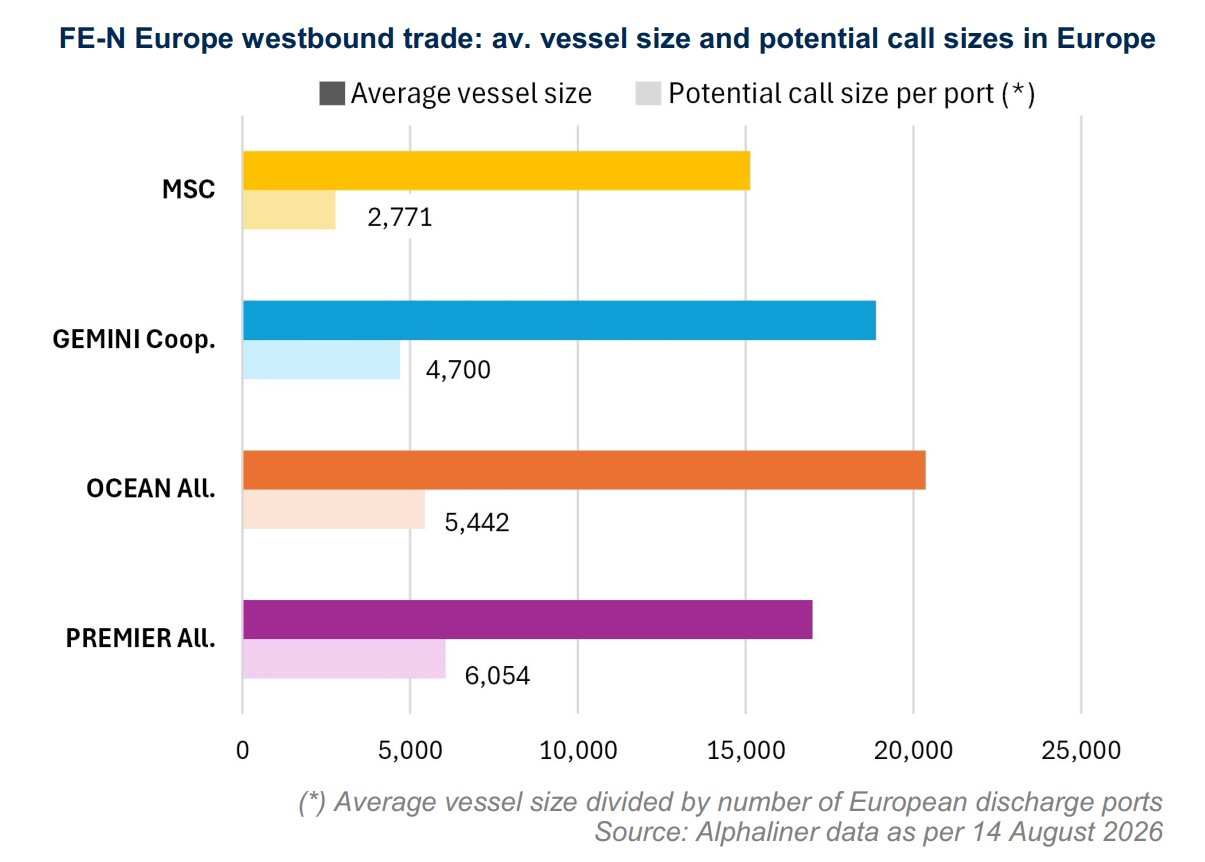
Carrier alliance networks are becoming increasingly specialised on the Asia-Europe trade, with relatively little overlap in the direct port combinations offered by competing alliances.
Sea-Intelligence highlights this pattern in Issue 781 of its Sunday Spotlight, showing how alliances are structuring their services around differentiated direct connections rather than competing across largely identical networks.
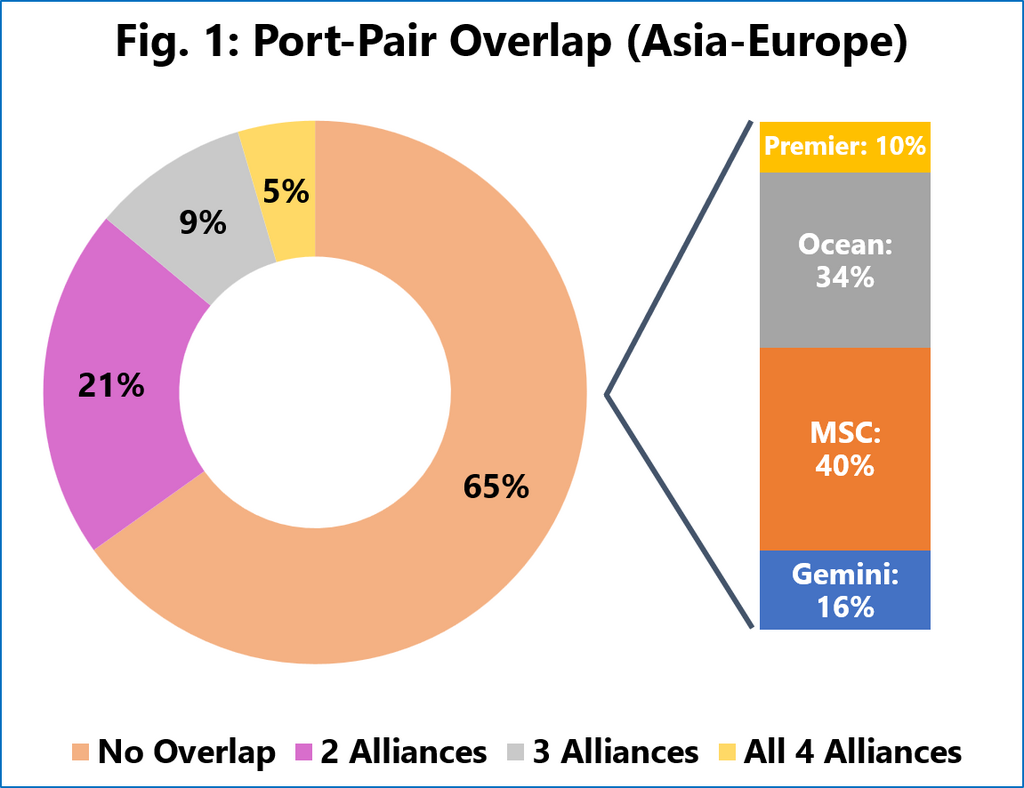
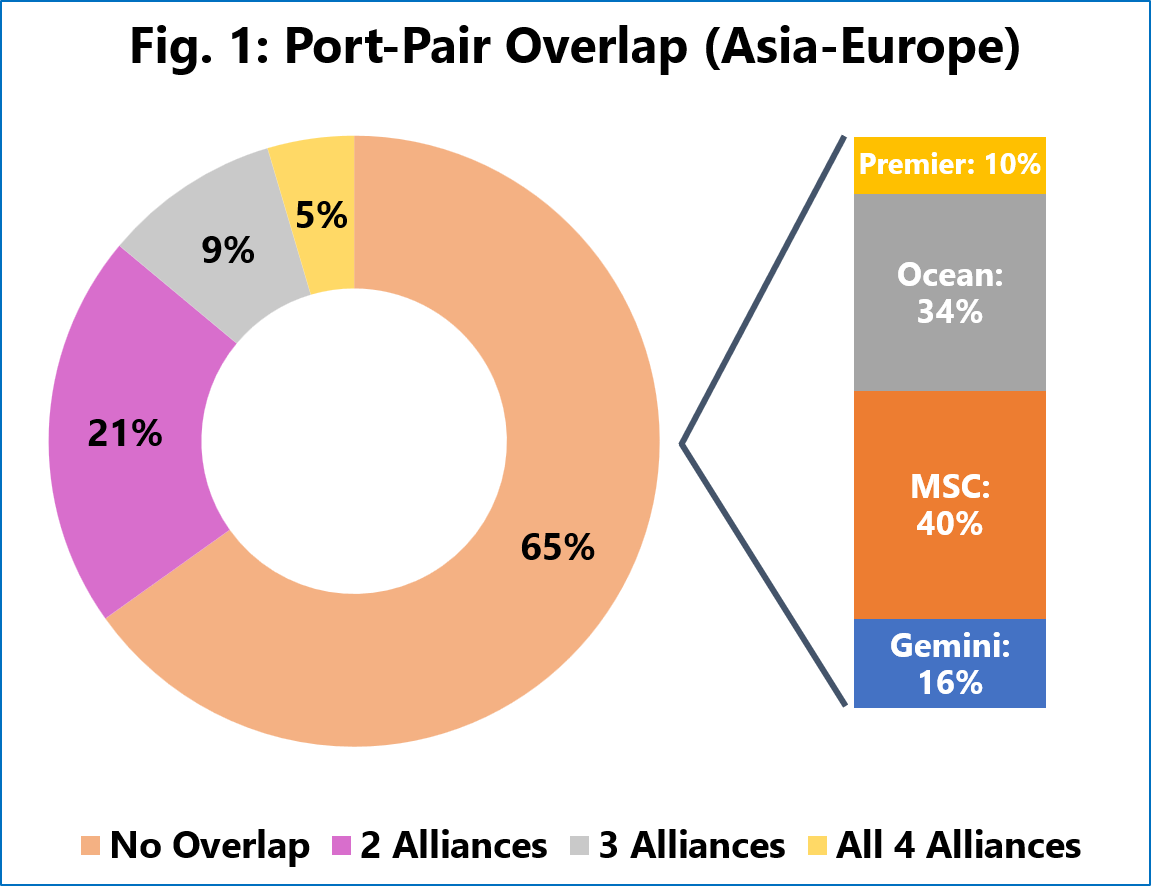
On Asia-Europe, 65% of direct port-pairs are served by only one alliance network. A further 21% are shared by two alliances, while just 9% are covered by three. Only 5% of direct port-pairs are served by all four alliance networks.
The figures point to a highly segregated market in which alliances are developing more specialised network structures. This gives carriers greater scope to differentiate their commercial offering through direct routings that competitors may not provide.
The breakdown of the 65% of port-pairs with no alliance overlap also shows significant differences between the major networks.
MSC accounts for 40% of these exclusive single-alliance port-pairs, giving it the largest share of unique direct connections. Sea-Intelligence links this position to MSC’s extensive standalone fleet, which allows it to offer a substantial number of direct routings not available through competing alliance networks.
Ocean Alliance follows with a 34% share of exclusive Asia-Europe port-pairs, reflecting its similarly broad direct-call network.
Gemini Cooperation accounts for 16% of the specialised segment, while Premier Alliance represents the remaining 10%. According to Sea-Intelligence, Premier Alliance’s smaller share of exclusive port combinations reflects a comparatively more standardised network structure on the trade.
The figures underline how network differentiation is becoming an important part of alliance competition, with direct port coverage providing carriers with opportunities to distinguish their services beyond simply offering the same routings as rivals.
Source: Sea-Intelligence, Sunday Spotlight Issue 781. Read the original commentary and view the accompanying “Alliance Network Segregation and Overlap” chart on the Sea-Intelligence Press Room.