
Maritime electrification is accelerating as shipping companies increasingly adopt battery energy storage systems (BESS) to support hybrid propulsion and all-electric vessel operations amid rising decarbonisation pressure across the maritime sector.
The maritime sector faces rising pressure as international decarbonization efforts increase the cost of greenhouse gas (GHG) emissions.
Battery Energy Storage System (BESS) is emerging as a practical solution, supporting hybrid propulsion in larger vessels and full-electric operation in smaller and short-range applications.
More than 1,300 vessels are electrified worldwide, with 81% using hybrid systems and around 70% operating in Europe.
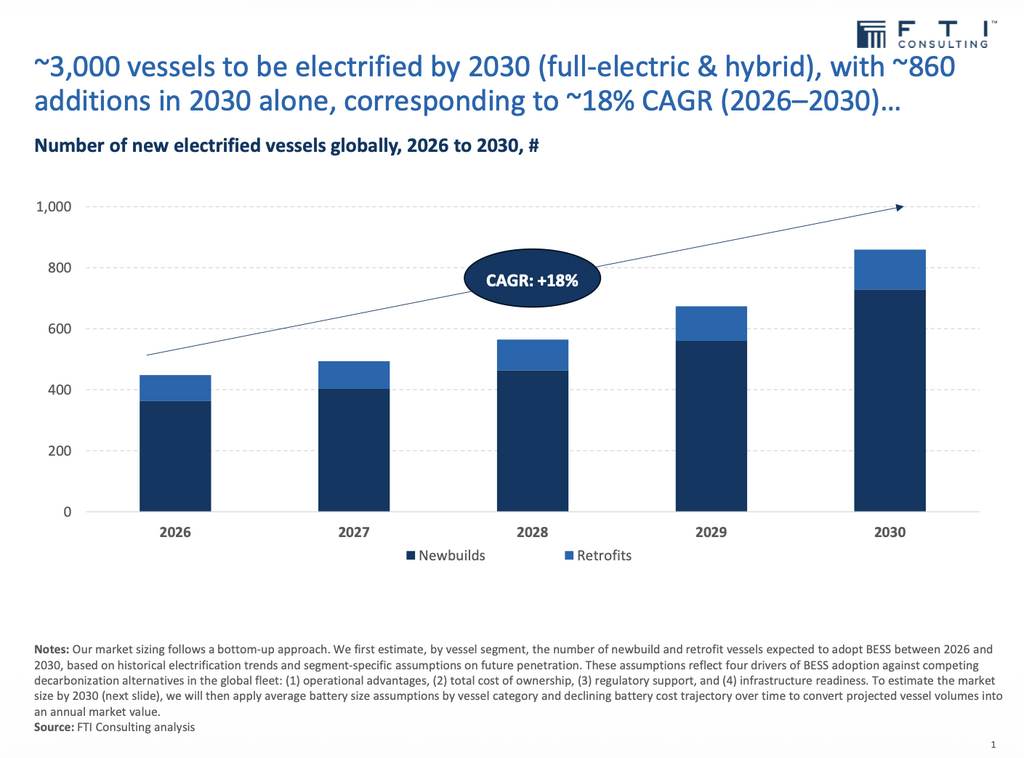
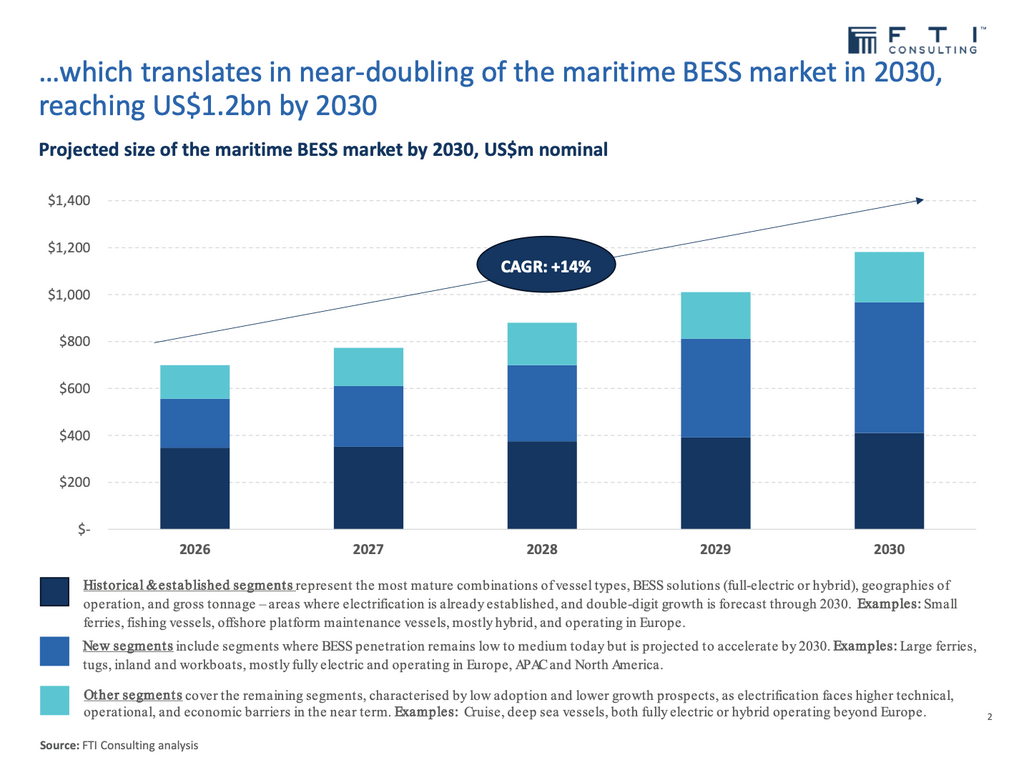
Analysts from FTI Consulting forecast more than 3,000 additional electrified vessels by 2030 (CAGR +18%), with the maritime BESS market projected to grow from around USD 700 million in 2026 to approximately USD 1.2 billion by 2030 (CAGR +14%).
According to the accompanying analysis, growth is expected to be driven by both newbuild and retrofit vessel activity, while electrification increasingly expands beyond Europe into APAC and North American vessel markets.
However, the analysis also notes that deep-sea shipping segments continue to face higher technical, operational and economic barriers to electrification.
Source: FTI Consulting (Linkedin)