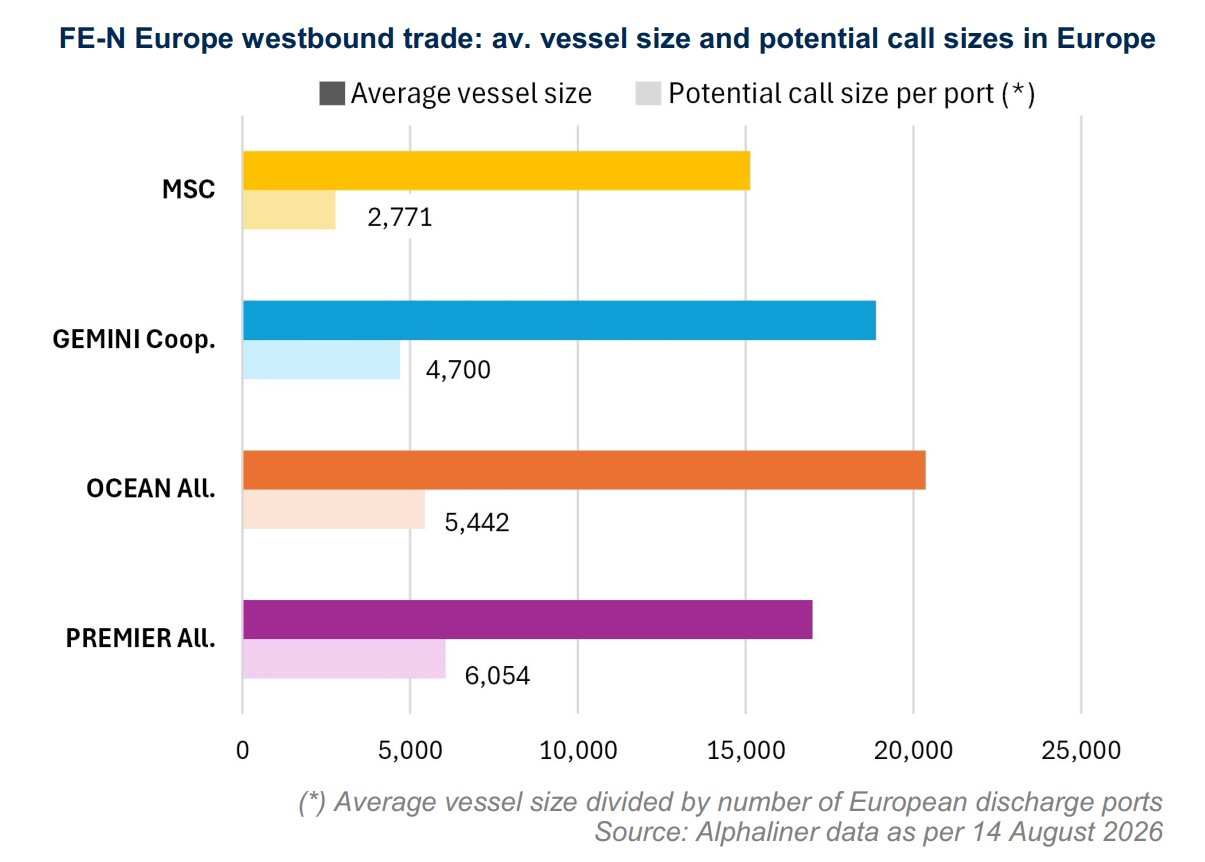
The latest Alphaliner update shows that alliance changes on the Far East–Europe corridor had only limited impact on container shipping market structure. Capacity concentration among MSC and the major alliances remains broadly unchanged year on year.
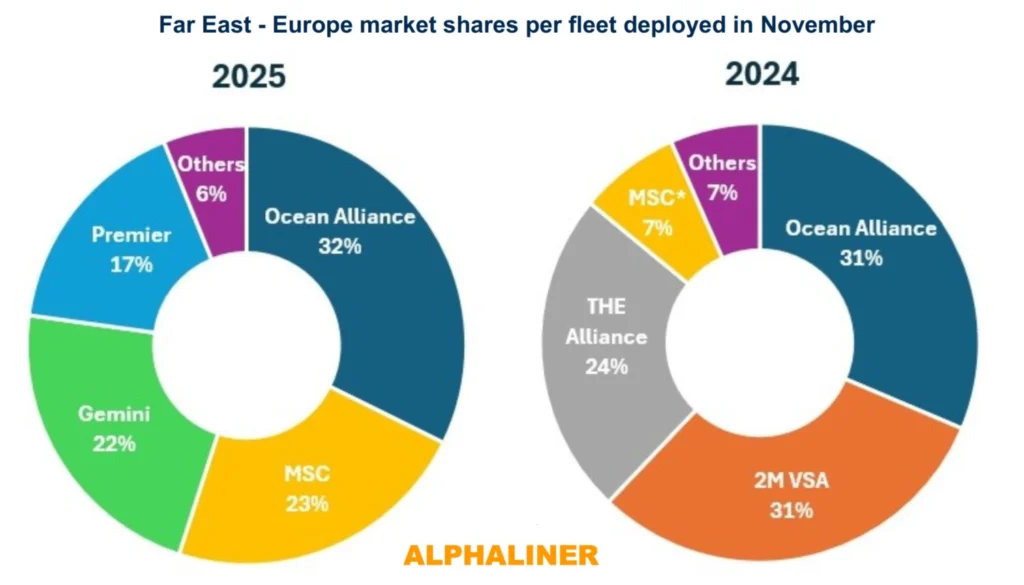
The market structure of the Far East–Europe trade has not been fundamentally changed by the alliance switches which took place in February, when MSC left the 2M Vessel Sharing Agreement with Maersk and the Danish carrier started the new Gemini Cooperation with Hapag-Lloyd.
Hapag-Lloyd in turn left THE Alliance, while the remaining member carriers continued the cooperation as a trio under the new name Premier Alliance.
In November 2024, four alliances with nine global carriers controlled 93.4% of the trade, leaving a 6.6% market share for smaller carriers.
One year later, the leading standalone carrier MSC, plus eight big carriers in three alliances, controlled 93.9% of vessel capacity, leaving 6.1% to smaller competitors.
Unsurprisingly, MSC is also the biggest Asia–Europe operator by capacity. The world’s largest carrier deployed a 1.78 Mteu fleet in November (22.7% market share).
MSC however increased its fleet on this corridor by only 2.0% year on year, well below the 6.2% market average.