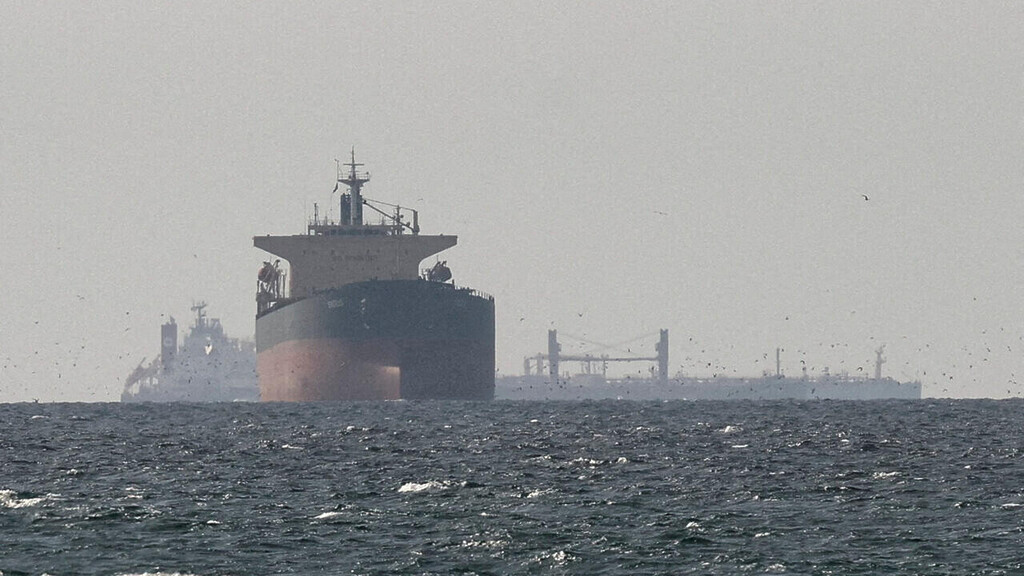
Strait of Hormuz shipping remains effectively restricted despite ceasefire headlines, with container lines continuing to avoid transits due to ongoing security uncertainty and operational risks.
Despite headlines to the contrary, and Trump’s insistence on this on social media, the Strait of Hormuz is de facto not open.
We continue to see information from Iran that vessels need to be approved by the Iranian military for a transit, and also conflicting messages in terms of whether payment is necessary, how much the payment is and how that payment is to be done.
Add to this claims from Iran, that Lebanon was supposedly part of the ceasefire agreement, and they see Israel’s continuing action in Lebanon as US and Israel reneging on the terms of the ceasefire.
The container lines – understandably – remain concerned and are not crossing. Hapag-Lloyd states: ”the situation in and around the Strait of Hormuz remains uncertain, and it is not yet clear whether the announced opening will be sustained. The safety of our crews and personnel ashore remains our top priority. Based on our current assessment, we will continue to avoid transiting the Strait of Hormuz for the time being.”
Since yesterday only 1 container vessel has exited the Strait of Horrmuz. That was 700 TEU “Lucia” coming from the Iranian port of Bandar Abbas.
A small trickle of tanker and bulkers crossed, and quite a few of those came from Iranian ports.
Tariff changes are back on the table. Trump has stated that a 50% tariff on goods from countries selling weapons to Iran will be effective immediately.
This is not in any executive order, in Federal Register or anywhere else apart from social media and hence, at this point in time, not actually applicable despite the president’s statement. Should this change, it might impact US imports from China.
CMA CGM continues to gradually ramp up services operated through Suez instead of deviating around Africa. Their current schedules now shows regular transits for the BEX2, MEDEX and MEX Asia-Mediterranean services as well as a couple of planned transits on the EPIC service from Indian Subcontinent to Europe.
Source: Lars JENSEN (Linkedin)