The Gulf conflict continues to tighten container tonnage supply, according to industry analysts Alphaliner.
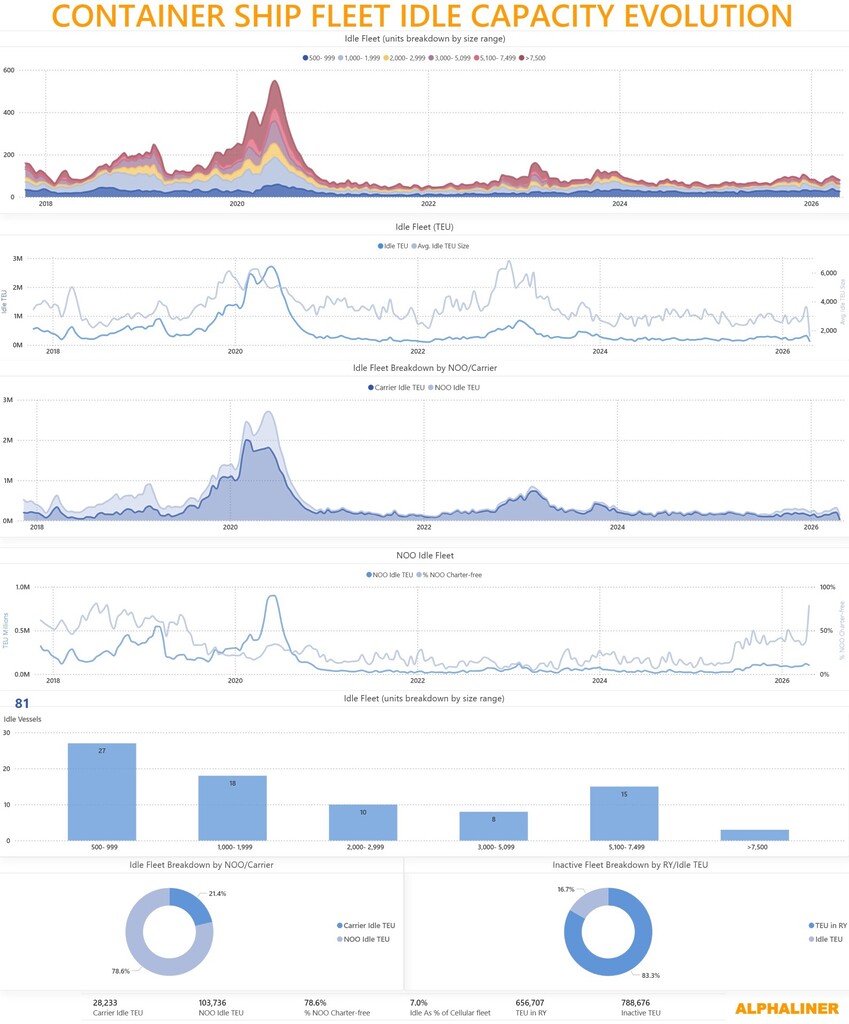
Nine weeks after the start of military action in the Middle East Gulf, commercial idling of container tonnage remains low.
The idle vessel fleet briefly touched the 1% capacity mark for the first time in more than two years, but has since slipped back to 0.7%. At this level, the liner sector remains in “full employment”, with no signs of “structural” idling.
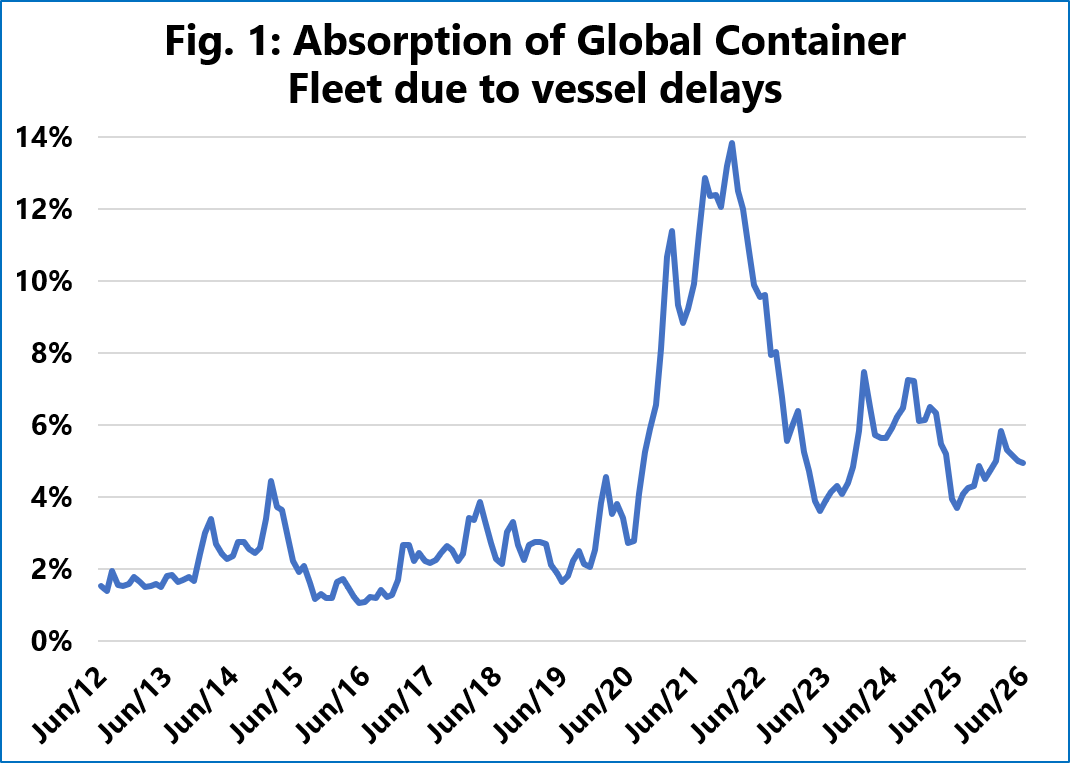
This does not mean the market is unaffected. Most carriers have had to adjust their networks in some way, and the operational impact of these changes continues to absorb vessel capacity. Diverted sailings, rescheduled loops, vessel detours and delays all add to effective tonnage demand.
Alphaliner does not count every vessel stuck in or affected by the Middle East situation as “commercially idle”. This distinction matters.
At least 58 container ships, representing around 310,000 teu, have diverted or sheltered due to the conflict. With widespread AIS transponder deactivation in the region, the actual figure could be higher. These vessels are not available for normal revenue service, which means this “forced inactivity” is draining supply even if it does not appear in the commercial idle fleet.
As per our latest count, Alphaliner tallied 81 ships of 235,705 teu as commercially idle.
Capacity tied up in drydock also declined moderately over the past fortnight, falling by almost 150,000 teu to 141 units of 656,707 teu. Combined, the idle and “in yard” fleet accounted for 2.7% of the global fleet.
Source: Alphaliner