North American container traffic weakened in April as several major gateways reported lower inbound volumes compared with a year earlier, although performance varied significantly across the region.
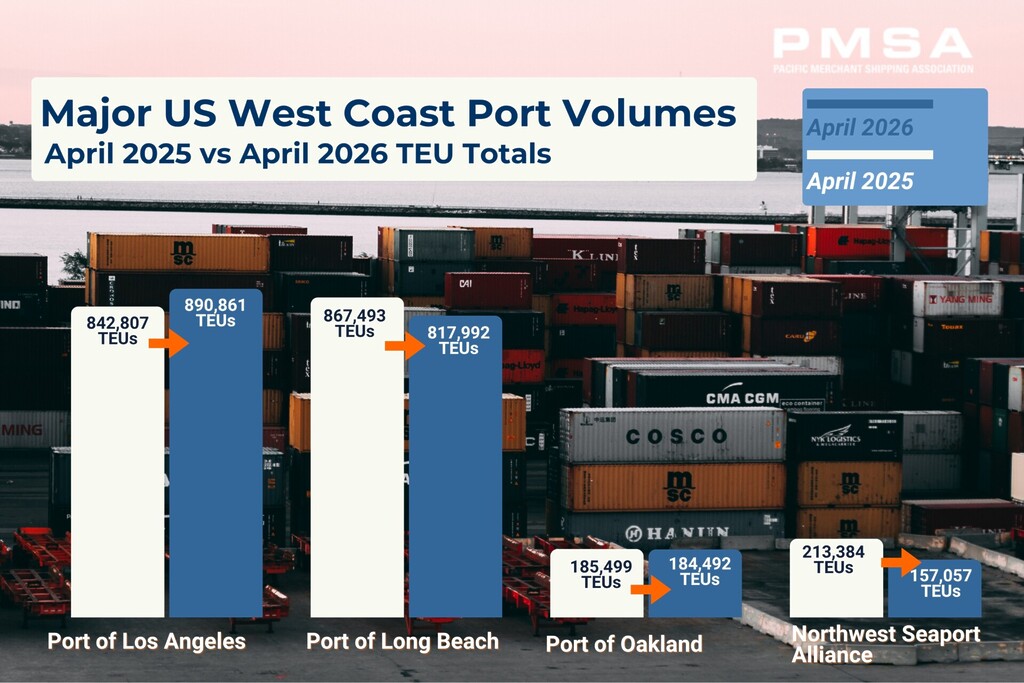
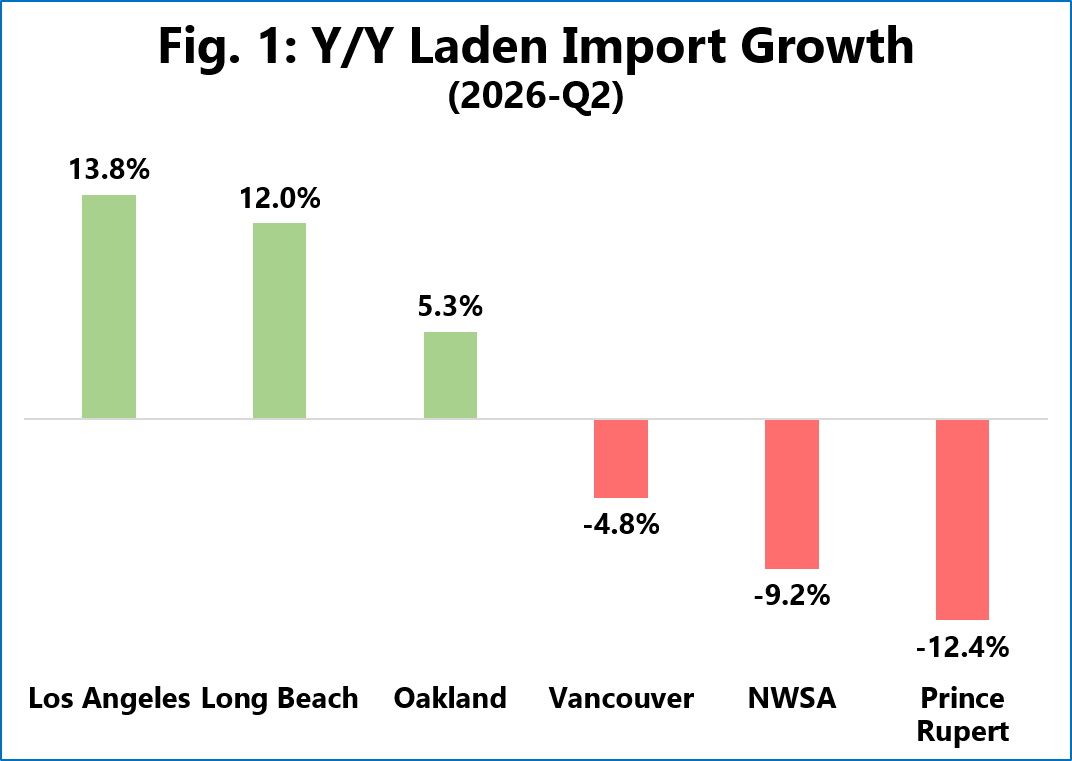
On the US West Coast, the Port of Los Angeles remained one of the stronger performers, handling 459,825 inbound loaded TEUs in April, up 4.7% year-on-year. By contrast, neighbouring Long Beach saw inbound volumes fall 7.1% to 389,835 TEUs.
Further north, the Northwest Seaport Alliance ports of Seattle and Tacoma experienced a much sharper decline, with inbound loaded traffic dropping 29.9% year-on-year to 73,867 TEUs.
On the East Coast, the picture was similarly mixed. The Port of Savannah handled 219,387 inbound loaded TEUs in April, down 13.2% from a year earlier, while Charleston’s inbound traffic fell 12.9% to 89,914 TEUs. Norfolk also reported weaker imports, with inbound loaded volumes declining 9.1% year-on-year to 123,257 TEUs.
Canadian gateways proved more resilient. Vancouver’s inbound loaded traffic slipped just 0.2% to 166,486 TEUs, while Prince Rupert recorded a 2.9% increase to 37,188 TEUs.
Despite the softer April performance, several major ports continue to handle substantially more container traffic than before the pandemic. Year-to-date throughput at Los Angeles and Long Beach remains well ahead of 2019 levels, underlining the continued concentration of cargo flows through selected North American gateways even as broader market conditions become more challenging.
Source: Pacific Merchant Shipping Association. Read the full article