The Gulf conflict is tying up container shipping capacity and keeping commercial idling low, according to industry analysts Alphaliner.
In early 2026, market sentiment expected liner services to return to the Red Sea and Suez Canal, with a gradual release of vessel capacity tied up in diversions.
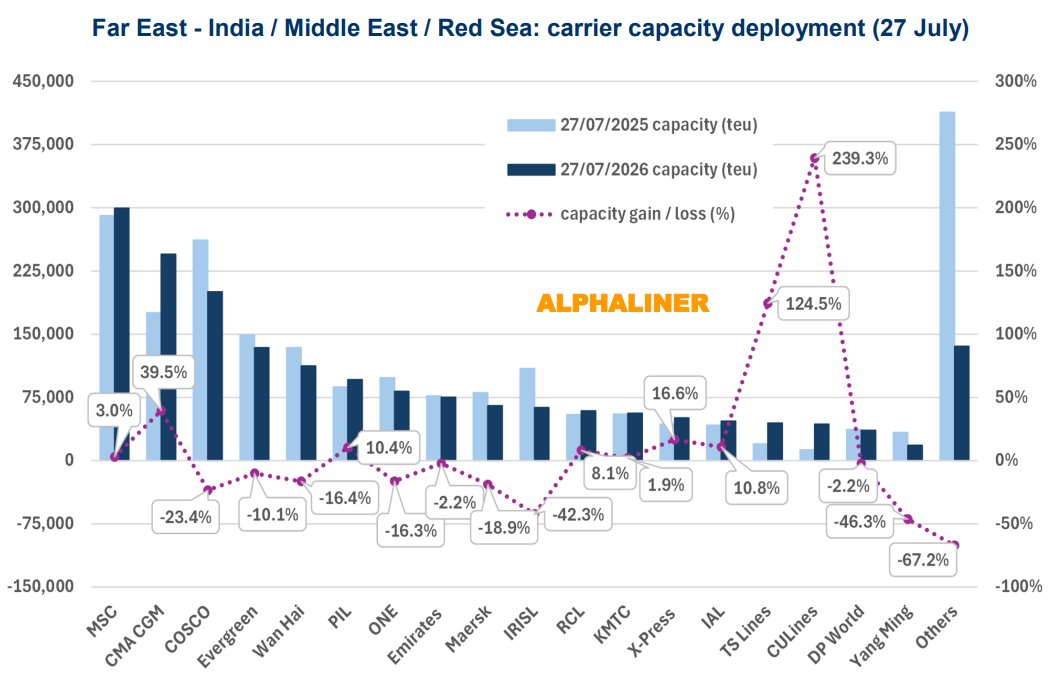
The outbreak of the Gulf conflict has reversed this. Not only has it prompted most carriers to walk away from initial plans to go back to the shorter Red Sea route: The conflict has also stranded hundreds of container ships that cannot leave or enter the Gulf due to the high risk of transiting the Strait of Hormuz.
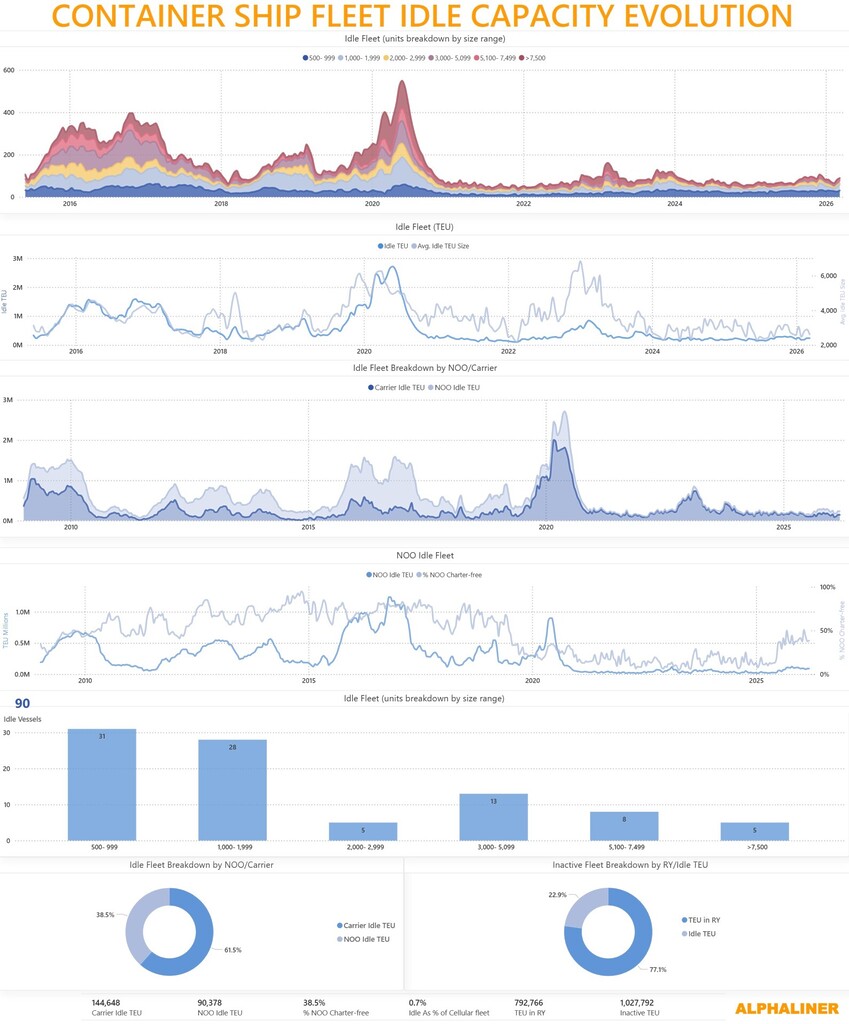
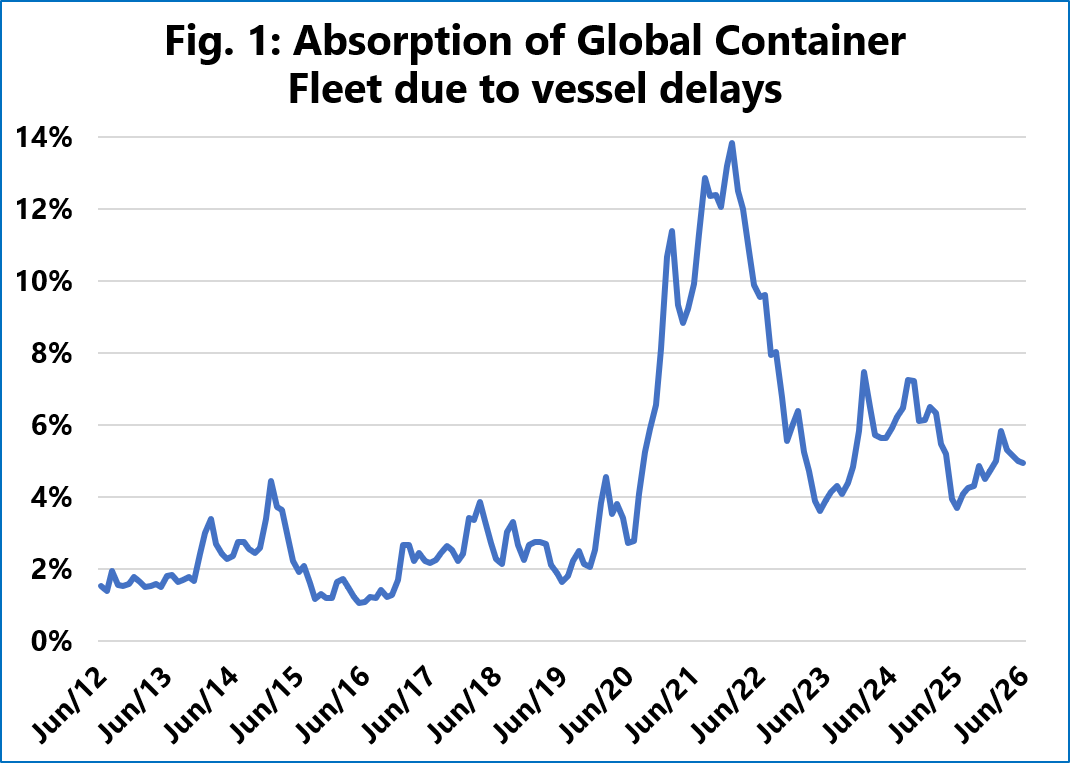
As of early March, Alphaliner recorded 90 ships for 235,026 teu as commercially idle. At only 0.7% of the global fleet, the vessel market remains fully employed. Operational challenges that arise from global disruptions swiftly absorb tonnage that could otherwise become surplus in a scenario that was purely driven by cargo demand.
It is important to note that Alphaliner does not count vessels stuck in, or affected by, the Middle East Gulf situation as ‘commercially idle’. With that in mind, at least 73 container ships, or close to 400,000 teu, diverted or sheltered due to the conflict.
With widespread AIS transponder deactivation (‘going dark’) and contingency plans still in the making, the actual number could be higher. Since these ships are not ‘available’, this ‘forced inactivity’ further drains tonnage supply.
Should the conflict in the Middle East persist, capacity demand will be further inflated through increasing port congestion. With large box volumes diverted to gateway ports such as Sohar, Jeddah, Mersin, and various hubs, terminal infrastructure is being tested.
Source: Alphaliner