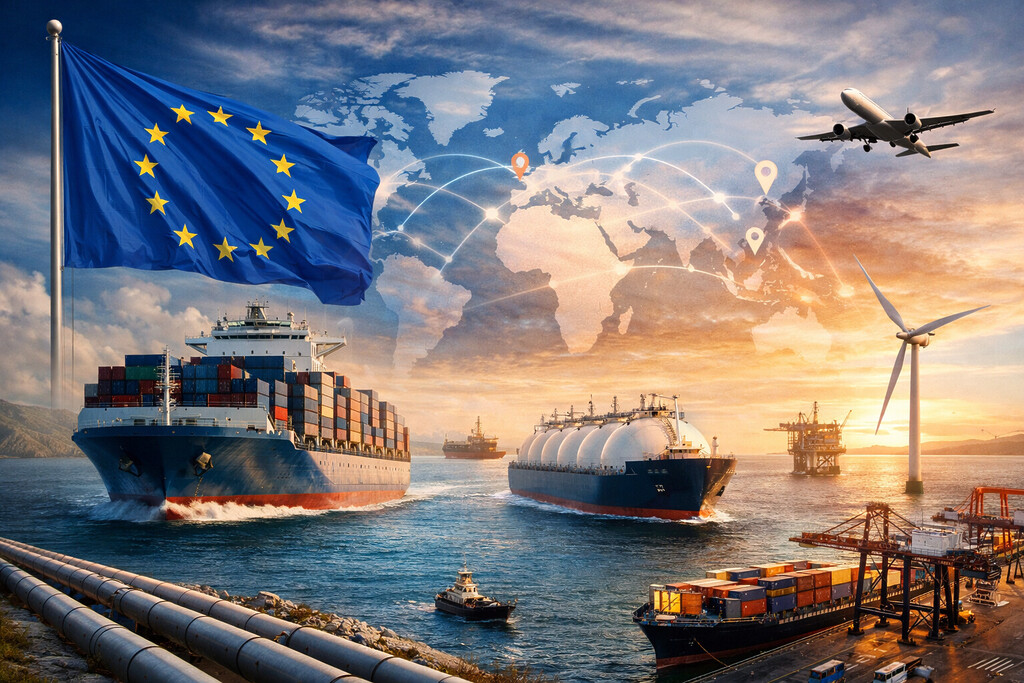
European shipping is a vital part of the EU economy, supporting energy security, food supply, and stable global supply chains. While the EU represents a modest share of global GDP, its shipping fleet remains one of the most influential in the world and carries the majority of the EU’s external trade.
At a time of geopolitical tension, disrupted trade routes, and rising protectionism, shipping continues to be essential in keeping Europe connected to international markets.
Open trade and stronger international partnerships remain important for Europe’s long-term competitiveness. Expanding Free Trade Agreements with strategic partners can help diversify supply chains, improve economic resilience, and strengthen Europe’s position in global trade.
Strong maritime provisions within these agreements are equally important, as they can support fair market access, reduce trade barriers, improve multimodal transport opportunities, and create better operating conditions for European shipping companies.
Secure trade lanes and access to clean fuels are also becoming central to the future of the sector. Protecting key shipping routes from instability and security threats is essential for maintaining smooth trade flows, while greater international cooperation on clean fuel production and infrastructure can support shipping’s transition toward net-zero emissions by 2050.
By combining open trade, maritime security, and sustainability, Europe can further strengthen its role as a global leader in maritime transport.
Source: European Shipowners | ECSA