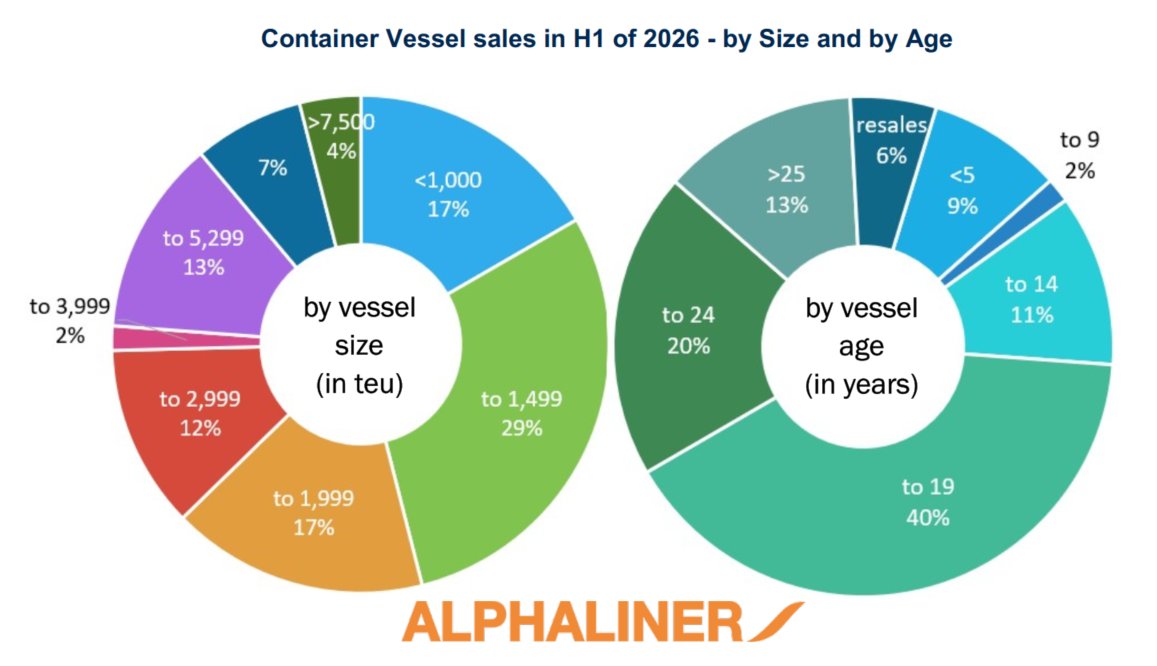
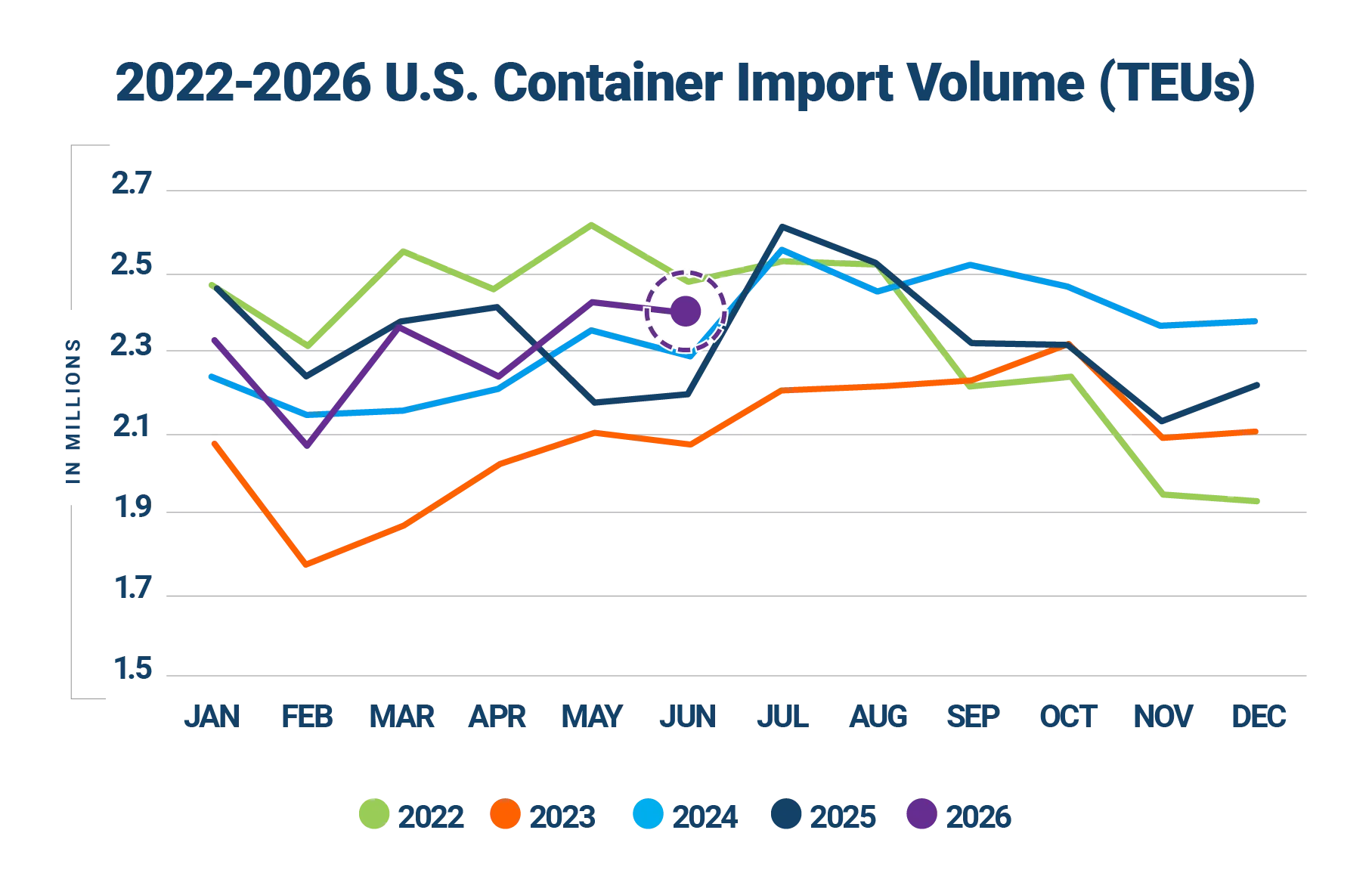
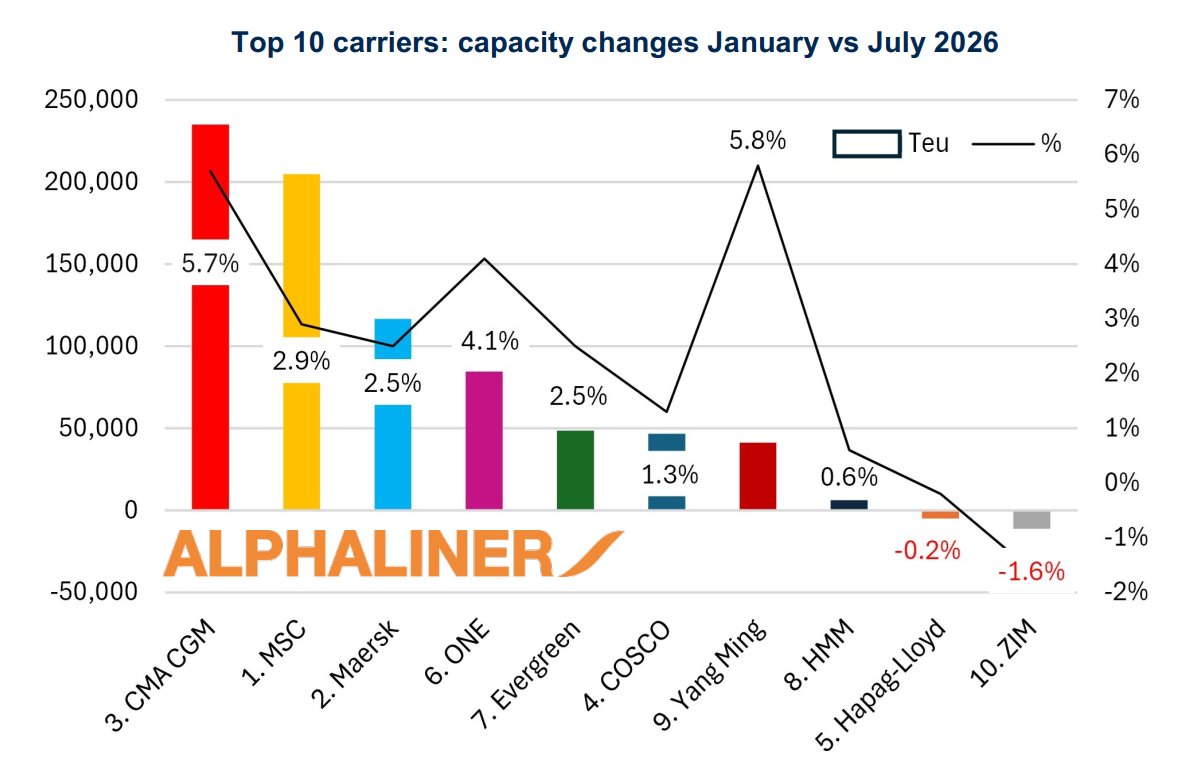
The container market remains firm across vessel sizes, according to industry analysts Alphaliner, even as the full impact of the Middle East war has yet to be reflected in charter activity.
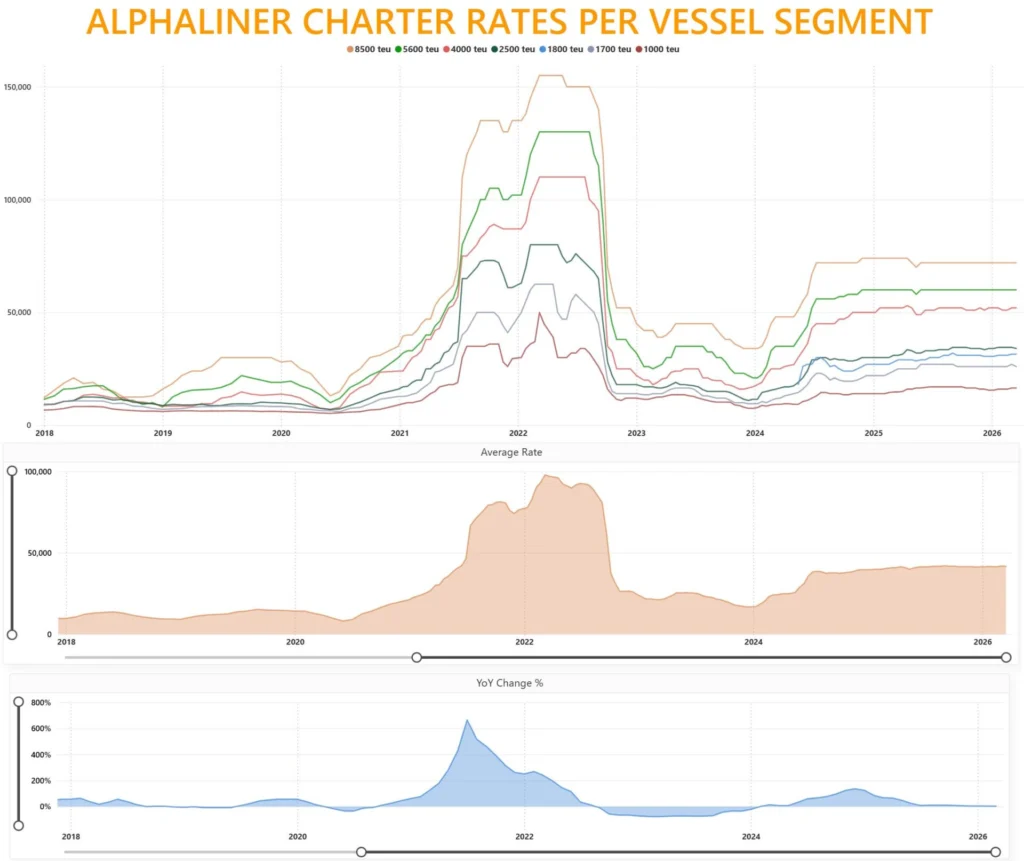
Demand for tonnage remains high across the board, with charter rates evolving at consistently robust levels for all sizes of ships.
Forward fixing continues unabated, and not only for large ships. Periods are also still long, with most big vessels and smaller modern units able to secure multi-year employment ranging from 24 to 60 months.
With the supply of NOO ships being continuously low and expected to remain the same for many sizes in the coming months, charter rates are likely to maintain their current strong momentum in the short term.
Having said that, the war in the Middle East has yet to show its full impact on the market.
On paper, having around 140 container vessels held up in the Gulf combined with massive service disruptions and re-routings, should benefit non-operating owners (NOOs), with carriers seeking extra capacity to compensate for the vessels held up, deal with port congestion, or in certain cases, meet the longer teu-mile demand caused by the deviations.
However, this is not so clear-cut in practice. With a lot of loops serving the Middle East no longer able to make it through the Gulf due to an operationally closed Strait of Hormuz, carriers are forced to shorten their services, cut capacity and in some cases, reduce the number of ships deployed.
The next few weeks should bring more clarity in this respect, but meanwhile, NOOs continue to enjoy a remarkably strong and resilient market.
Source: Alphaliner