Container shipping networks have become structurally leaner since the disruptions of 2020, with shipping lines maintaining broad global coverage while reducing service frequency and relying more heavily on transshipment, argues Sea-Intelligence in its latest Sunday Spotlight analysis.
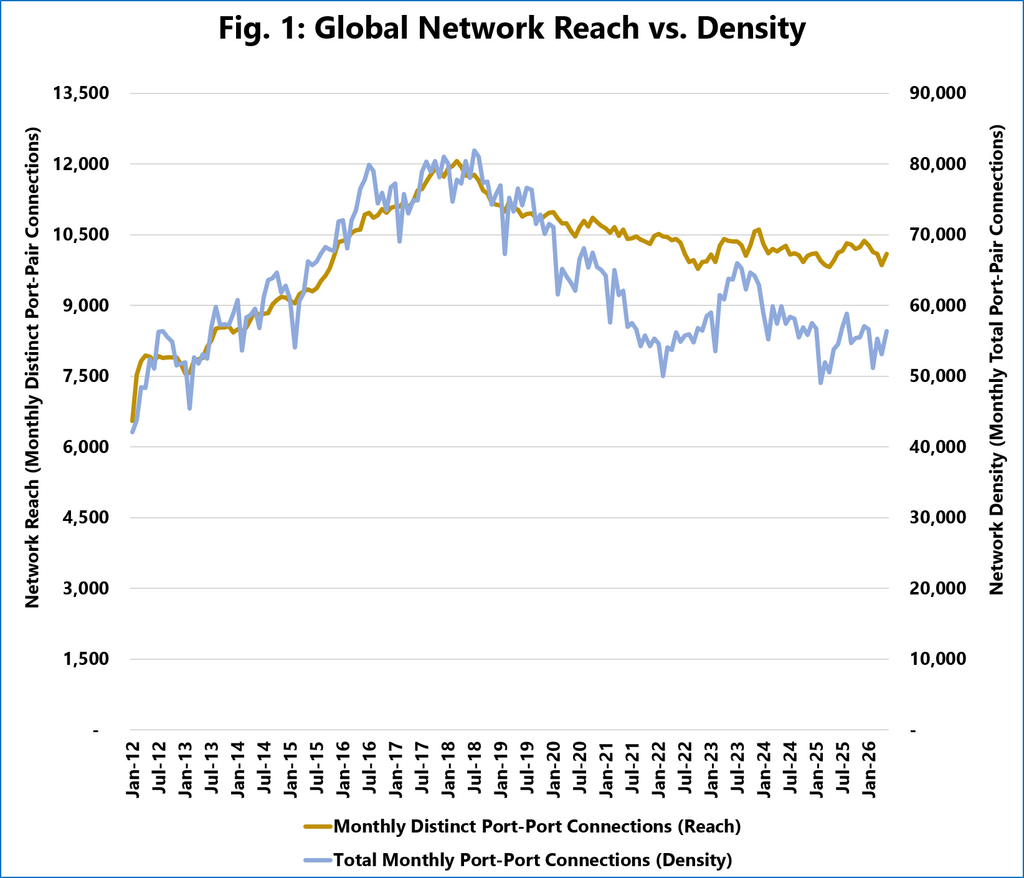
According to Sea-Intelligence, the industry’s operating model has changed significantly over the past decade. Between 2012 and 2018, the expansion of direct deep-sea port connections was accompanied by a corresponding increase in the number of monthly port calls, as carriers simultaneously broadened their network reach and increased service frequency.
That relationship broke down during the pandemic. While the number of direct port-pair connections declined only moderately before stabilising, service frequency contracted much more sharply. Rather than rebuilding the dense service networks seen before 2020, carriers have retained much of their geographical coverage while operating fewer direct sailings.
Sea-Intelligence argues that this represents a structural change in how liner networks are managed. Instead of adding more services, carriers are increasingly consolidating cargo through transshipment hubs and optimising vessel deployment across existing trade lanes. The result is a leaner network that preserves market reach while reducing the number of direct port calls.
If this operating model persists, the post-pandemic period may mark a lasting shift in container shipping, with greater reliance on hub-and-spoke networks and lower service frequencies becoming the industry’s new normal.
Source: Sea-Intelligence – Structural Contraction of Global Liner Networks (9 July 2026).