Strait of Hormuz shipping controls are tightening after Iran launched a new maritime authority and digital insurance platform aimed at strengthening oversight of vessels and cargoes transiting one of the world’s most strategically important maritime chokepoints.
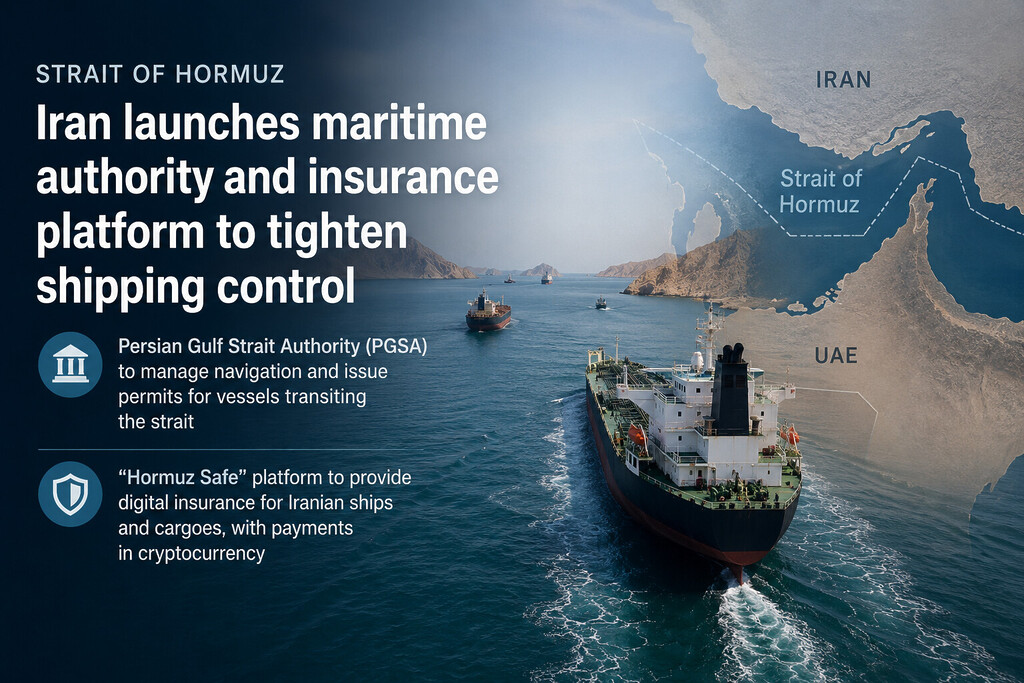
Iran has launched a new maritime authority to tighten its control over shipping in and around the Strait of Hormuz, while also introducing a new insurance platform designed to provide cover for Iranian shipping and cargoes transiting the waterway.
The newly established Persian Gulf Strait Authority (PGSA) will manage navigation through the strait and act as the legal authority representing Iran in managing vessel transit through the region.
According to Iranian media reports, ships intending to transit the waterway will receive rules and regulations from the authority and must obtain a permit to pass.
Passage without permission could be considered illegal under the new framework.
Iran previously claimed control over a broader area surrounding the Strait of Hormuz and adjacent waters, stretching from Qeshm Island to sections of the UAE coastline.
Separately, the newly launched “Hormuz Safe” platform will provide what Iran describes as “fast, verifiable digital insurance” for Iranian shipping companies and cargo owners operating in the Gulf region and surrounding waterways.
Payments under the platform are expected to be settled using cryptocurrency.
The measures come amid continuing geopolitical tension in the Middle East Gulf region following recent conflict involving Iran, Israel and the United States, which disrupted shipping activity around the Strait of Hormuz, sharply reduced tanker traffic and pushed insurance and freight costs higher across global maritime markets.
Although a ceasefire is now in place, ongoing military and security pressures around the waterway continue to weigh on regional exports of crude oil, LNG and other commodities.
Source: Leonard Fisher-Matthews, Argus