Transpacific container trade patterns continued to shift during the first quarter of 2026, with Canadian West Coast ports gaining market share at the expense of major US gateways as shippers adjusted routing strategies amid ongoing trade tensions and supply chain uncertainty.
According to Sea-Intelligence, overall North America West Coast laden import volumes fell by 3.9% year-on-year during 2026-Q1, but the decline was concentrated almost entirely in US ports. In contrast, Canadian ports recorded solid growth, highlighting what the report describes as a “northward migration” of container volumes.
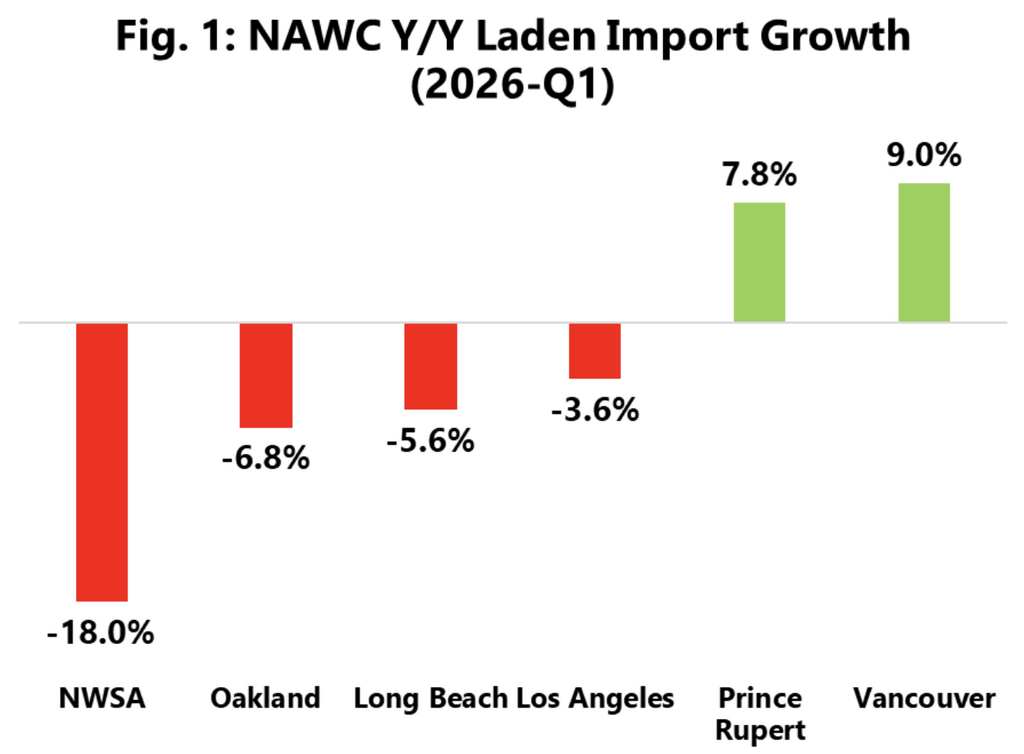
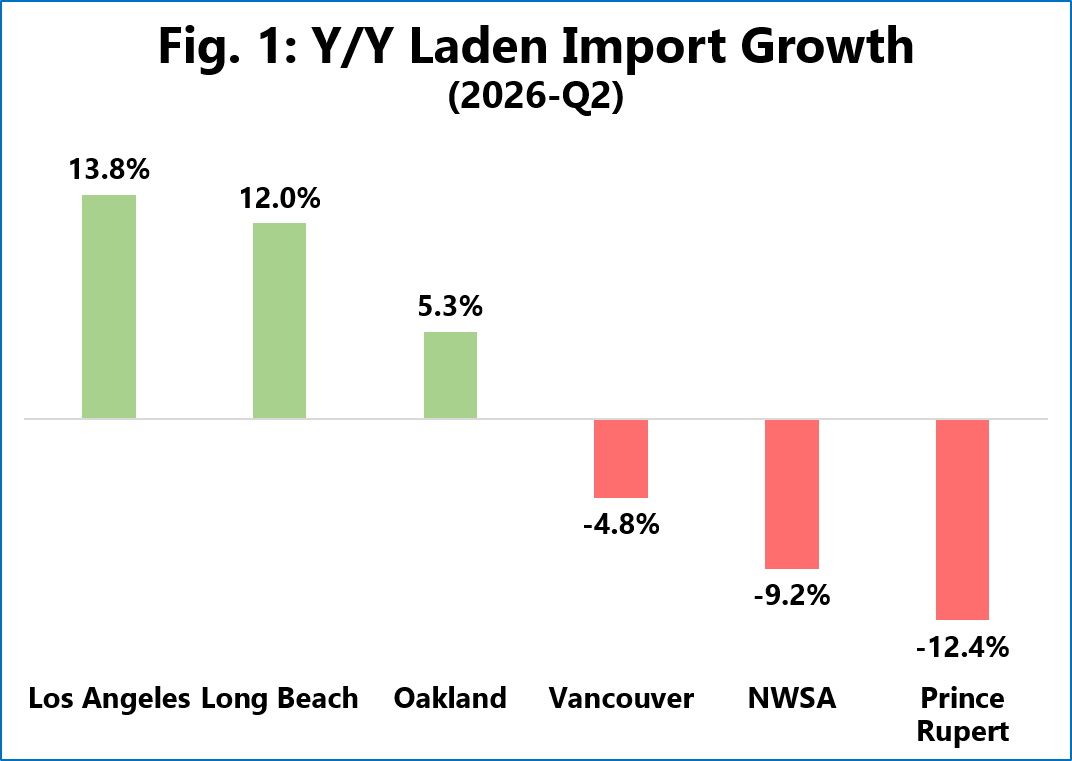
Vancouver posted a 9% year-on-year increase in laden import volumes to more than 491,000 TEU, reaching a new quarterly high for the port. Prince Rupert also recorded growth of 7.8% year-on-year, continuing its recovery from weaker volumes seen in recent years.
Meanwhile, major US West Coast ports all posted negative growth figures. The Northwest Seaport Alliance — covering Seattle and Tacoma — recorded the sharpest decline, with laden import volumes falling 18% year-on-year during the quarter.
Sea-Intelligence said the data points to deliberate rerouting decisions by both carriers and shippers, driven by a combination of US trade war pressures, cross-border rail advantages into the US Midwest, and continued concerns over labour disruption and congestion risks at US West Coast ports.
The analysis also highlighted signs of broader cooling across the transpacific container market. Aggregate laden import volumes across North America West Coast ports fell from around 3.63 million TEU in the first quarter of 2025 to 3.49 million TEU in 2026-Q1, extending a flattening trend seen over recent quarters.
According to Sea-Intelligence, the slowdown reflects the growing impact of the US trade war on transpacific container demand and supply chain routing decisions.
Source: Sea Intelligence