Container shipping in the Strait of Hormuz is facing a sharp escalation in security risks, according to industry analysts Alphaliner.
All three non-Iranian container ships attempting to transit the Strait of Hormuz yesterday reportedly came under attack, with two confirmed seized.
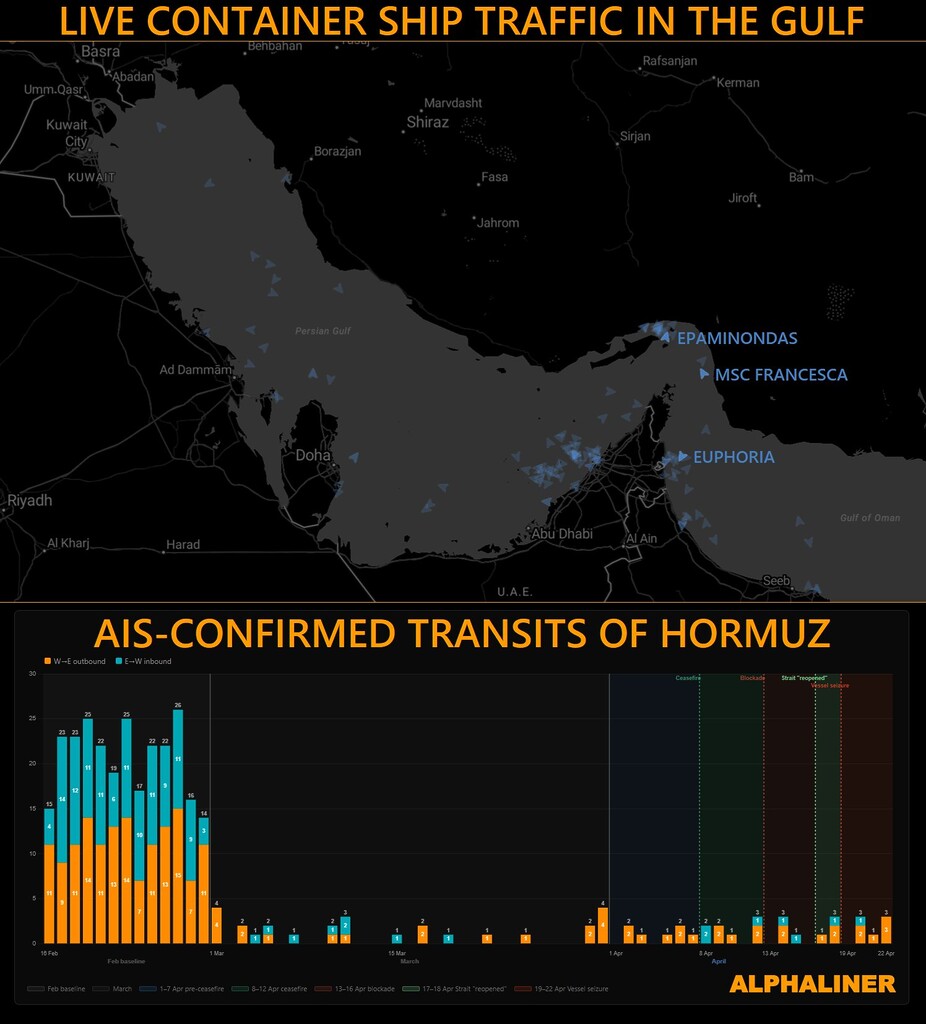
EPAMINONDAS (7,200 TEU, Technomar-owned, on MSCCargo charter) was hit by gunfire and rocket-propelled grenades while transiting eastbound, sustaining bridge damage before being seized by the IRGC. AIS signals place the vessel currently stationary between Qeshm, Larak, and Hormuz islands.
MSC FRANCESCA (11,200 TEU, MSC-owned) was intercepted eastbound, reportedly damaged and subsequently detained. Its last AIS position showed it stopped off the Iranian coast on the east side of the Strait.
A third vessel, EUPHORIA (UAE-owned), was also reported fired upon during transit but continued its voyage and is now offshore Fujairah east of the Strait.
The incidents mark a major escalation for container shipping, with liner traffic now directly exposed to the coercive risks. Yet the attacks also cap a broader pattern visible in container traffic through Hormuz over the past month and a half.
Alphaliner AIS-derived data has recorded 54 container ship crossings across 53 days since 1 March. Half of them involved Iranian-flagged or Iranian-owned vessels operating on domestic and state-linked routes. The remaining 27 were non-Iranian.
Persistent Iran-linked and regional feeder traffic has continued, while participation by international liner operators has become sporadic and increasingly vulnerable.
Among non-Iranian crossings, the overwhelming majority involved small feeder and regional tonnage, rather than sustained participation by the mainline container trades.
Meaningful deepsea liner participation has been limited to a handful of notable exceptions:
1 March: Maersk recorded the last conventional mainline transit before widespread withdrawal with the ASTRID MAERSK.
30 March: two large COSCOSHIPPING vessels (CSCL INDIAN OCEAN and CSCL ARCTIC OCEAN) transited outbound the Persian (Arabian) Gulf.
2 April: CMA CGM KRIBI ( cmacgm-owned) recorded a single isolated crossing, not repeated.
21 April: TEMA EXPRESS, owned by HapagLloydAG reappeared after a month-long AIS blackout on the east side of the Strait.
22 April: the first significant non-Iranian capacity attempt outside the apparent exemption framework in three weeks ended with all three vessels attacked.
A notable share of non-Iranian feeder crossings has also involved opaque ownership structures, suggesting parallel regional networks may have helped sustain residual corridor activity despite disruption.