
IMO MEPC 84 maritime fuel regulations are shaping the future of alternative fuels in shipping, as new data reveals significant shifts in global fuel consumption patterns.
The IMO MEPC 84 meeting opened this week and whilst the Straits of Hormuz are monopolising our attention, this session is extremely important for the future of alternative fuels. In connection with this week’s meeting, the IMO has published data on global maritime fuel consumption.
The report is based on the DCS reporting for vessels larger than 5,000 GT and covers 2024. Total consumption ended at 223.4 million tonnes – up 5.7% on 2023. By mass, heavy fuel oil and gas/diesel oil accounts for about 92.5% down from 95% in 2019 (the first DCS reporting year).
In this period the IMO has revised the GHG strategy, but more importantly, both the maritime ETS and Fuel EU Maritime regulations have entered into force. So, how have we fared with respect to alternative fuels?
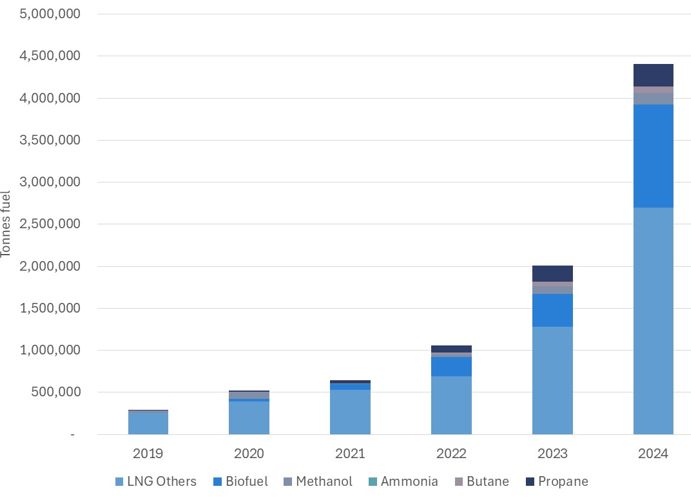
Volumes have increased 15 times over the period and there is one clear winner: LNG. Even if we exclude LNGCs we observe that LNG fuel consumption has increased from about 0.25 mtpa in 2019 to about 2.7 mtpa in 2024. From a combination of sources, we have determined that LNG bunkers consumption in 2025 rose by about 1 million tonnes and reached ~3.8 mtpa.
Interestingly we observe that biofuels lately have seen a meteoric growth. From about 30,000 tonnes in 2020 to about 1.23 million tonnes in 2024. A natural explanation for this growth is found in Europe. To reduce ETS costs and comply with Fuel EU Maritime one does not have many options besides blending in biofuels.
Being a little generous with the term “alternative fuel” we have also included LPG. There has been good growth, but as more than 120 vessels (MGC/VLGC) were delivered in the period we find the 0.35 million tonnes consumed in 2024 as surprisingly low and perhaps reflects Owners’ relcutance to move away from conventional fuesl in this sector (even if carrying a more compliant cargo). Keeping in mind the LPG is Fuel EU Maritime compliant and reduces the ETS bill as well.
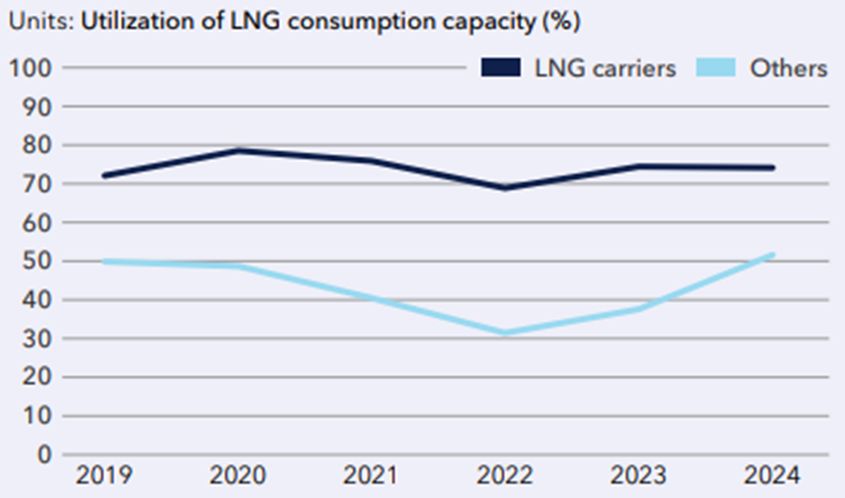
No ammonia consumption was registered and the Methanol consumption reached 0.14 MTPA (equivalent to less than 70,000 tonnes HFO). Despite making hefty investments in LNG DF engine systems, we observe that bunker prices do play a significant role. The below chart is taken from DNV’s “METHANE IN SHIPPING Compliance horizon for fossil LNG”.
The gas crisis of 2022 caused prices to go sky-high and from the chart we observe the utilization of LNG consumption capacity fell from about 50% in 2019/20 to about 30% in 2022 before rising to about 50% again.
Interestingly, the utilization rate fell for LNGCs in the same period too.
So returning to this week’s IMO meeting, the show must go on and whilst many readers will have bigger fish to fry in 2026, any business plan looking beyond the current war in the Middle East will need to keep a close eye on the outcomes of the MEPC 84.