Bunker fuel is rapidly emerging as the hidden fault line in the current Gulf crisis, with potentially far-reaching consequences for global shipping and trade.
While markets remain focused on crude oil and LNG flows, Martin Koelling warns that this overlooks a more immediate operational risk:
“Far fewer are watching bunker fuel — the heavy oil that powers the ships carrying 80% of global trade.”
That blind spot is now being exposed.
According to Gisele Widdershoven, the situation is no longer just an energy shock but something more structural:
“Bunker fuel markets are the first transmission channel through which geopolitical instability translates into global economic stress.”
At the core of the issue is the Gulf’s critical role not just in crude exports, but in refining and supplying marine fuels. The region’s integrated system — from refining in Saudi Arabia and the UAE to blending and redistribution via hubs like Fujairah — underpins global bunker availability. Disruptions at any point in this chain are already propagating across markets.
Early signs of stress are visible.
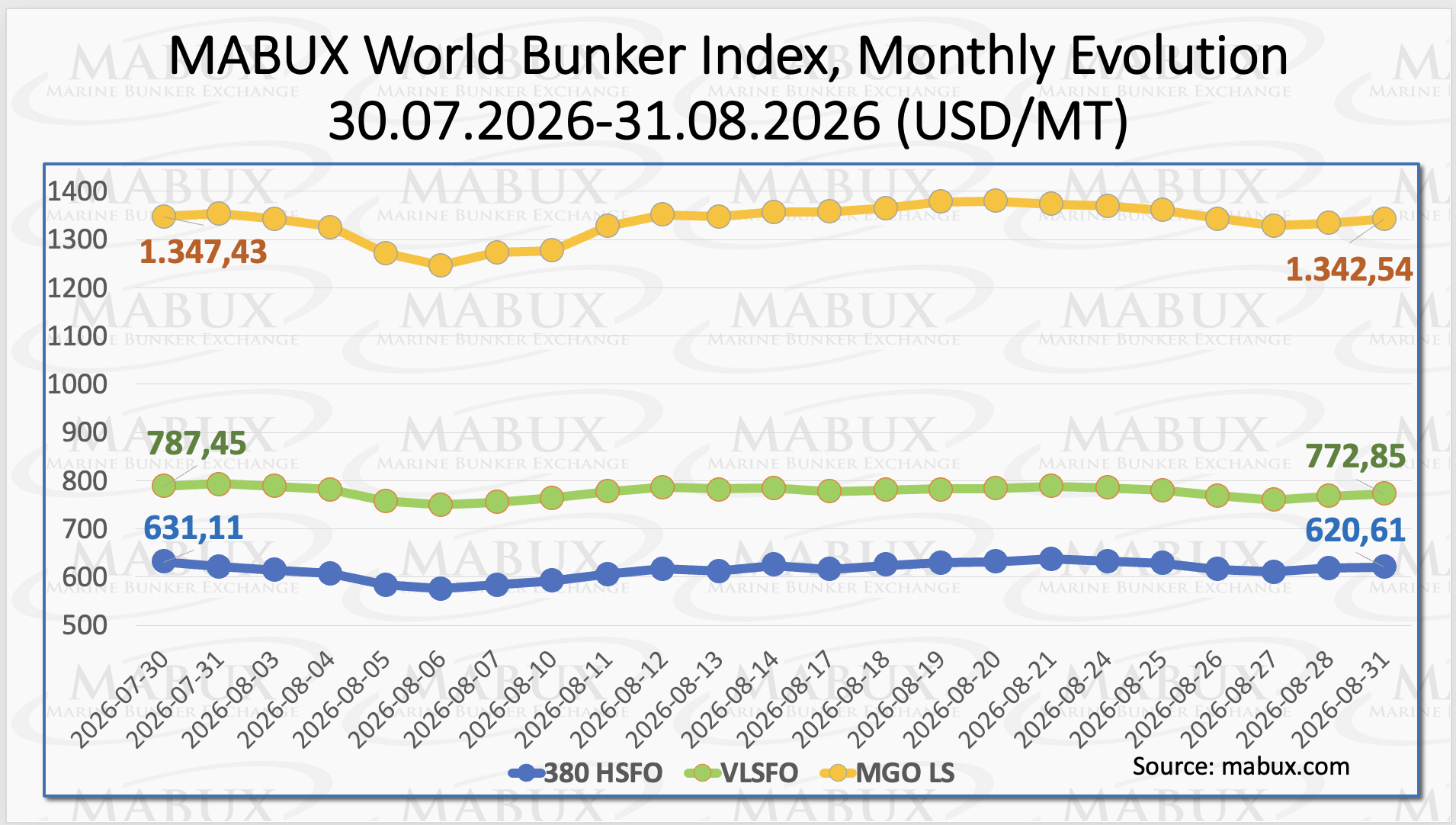
Fuel oil flows through the Strait of Hormuz have reportedly dropped sharply, while bunker operations in Fujairah have been significantly reduced. At the same time, prices are rising rapidly across key hubs, and inventories in major centres such as Singapore are tightening.
More importantly, market behaviour is shifting.
Ship operators are no longer optimising for price, but for fuel security — bunkering earlier, lifting larger volumes, and favouring term contracts over spot purchases. Traders, meanwhile, are holding inventory, reinforcing the tightening cycle.
The structural vulnerability is clear.
Global bunker demand of roughly 240–250 million tons per year is supported by a system with limited redundancy and minimal storage buffers. Even a modest disruption of 5–10% can trigger disproportionate effects.
As Martin Koelling highlights, timelines are critical:
“One month of disruption is very painful… Two months would be catastrophic.”
The impact is likely to be felt first in Asia, where refinery systems are closely tied to Gulf crude. But Europe is not insulated. As global flows adjust, cargoes — and fuel — will move to the highest bidder, raising the risk of fuel competition between regions.
The implications for shipping are already emerging:
- rising bunker costs and freight rates
- shifting trade routes and fuel demand geography
- increasing operational and insurance risks
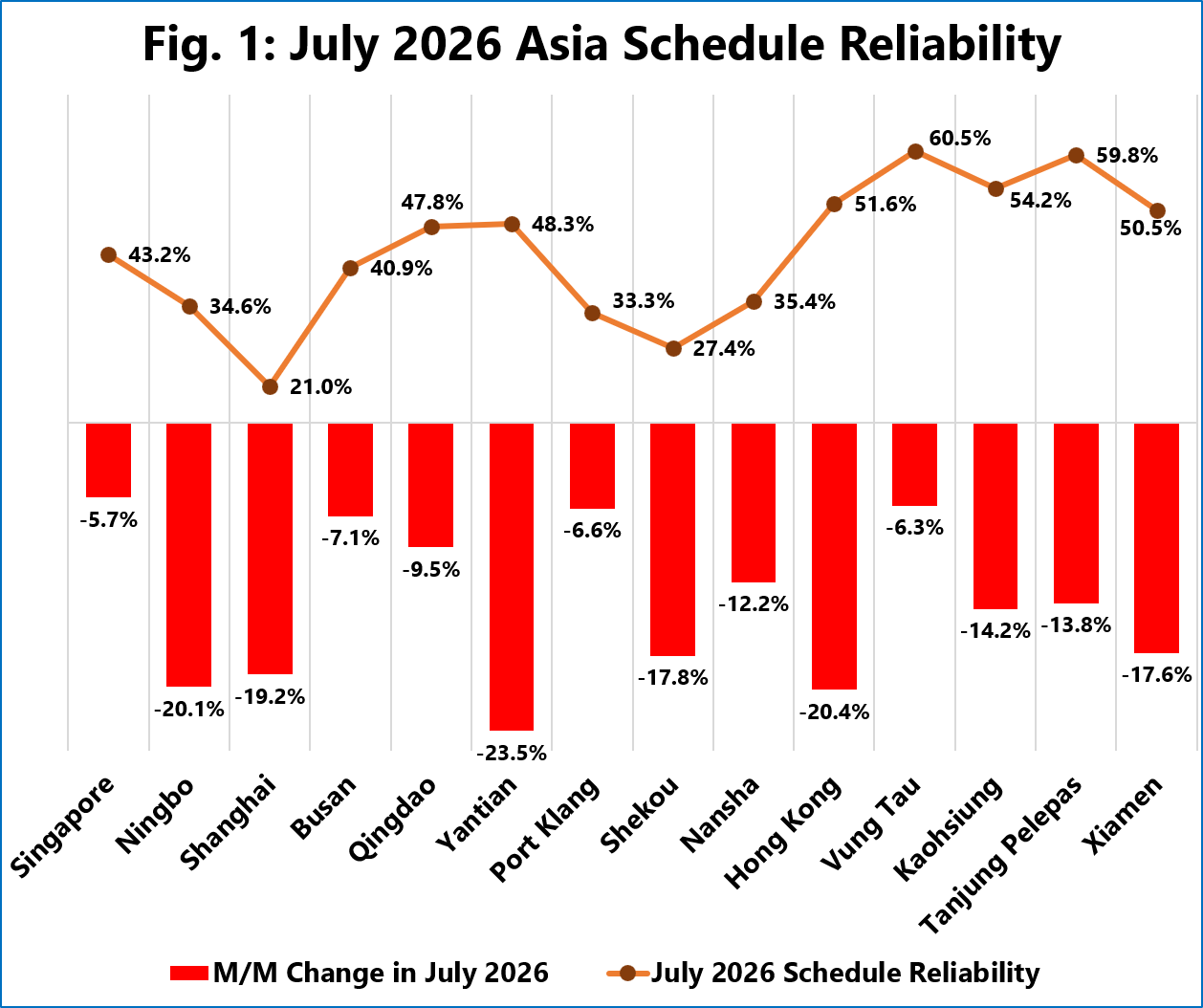
- reduced schedule reliability
Fuel is no longer just a cost variable — it is becoming a constraint on global shipping capacity.
What is unfolding is not simply another price cycle, but the early stages of a potential bunker supply shock — one that could reshape how shipping operates if disruptions persist.
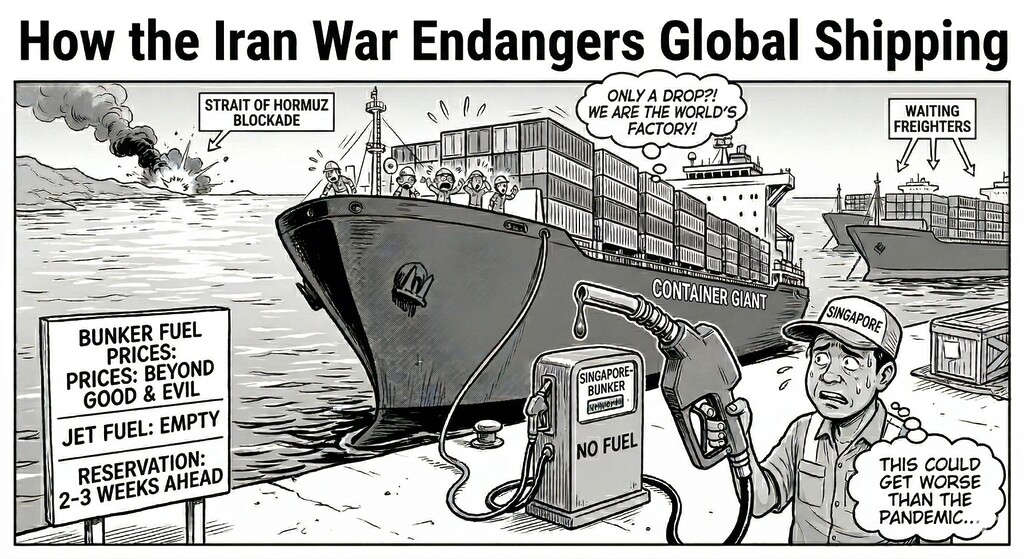
Source: Insights adapted from Gisele Widdershoven and Martin Koelling (Handelsblatt). Illustration adapted from Martin Koelling’s LinkedIn post.