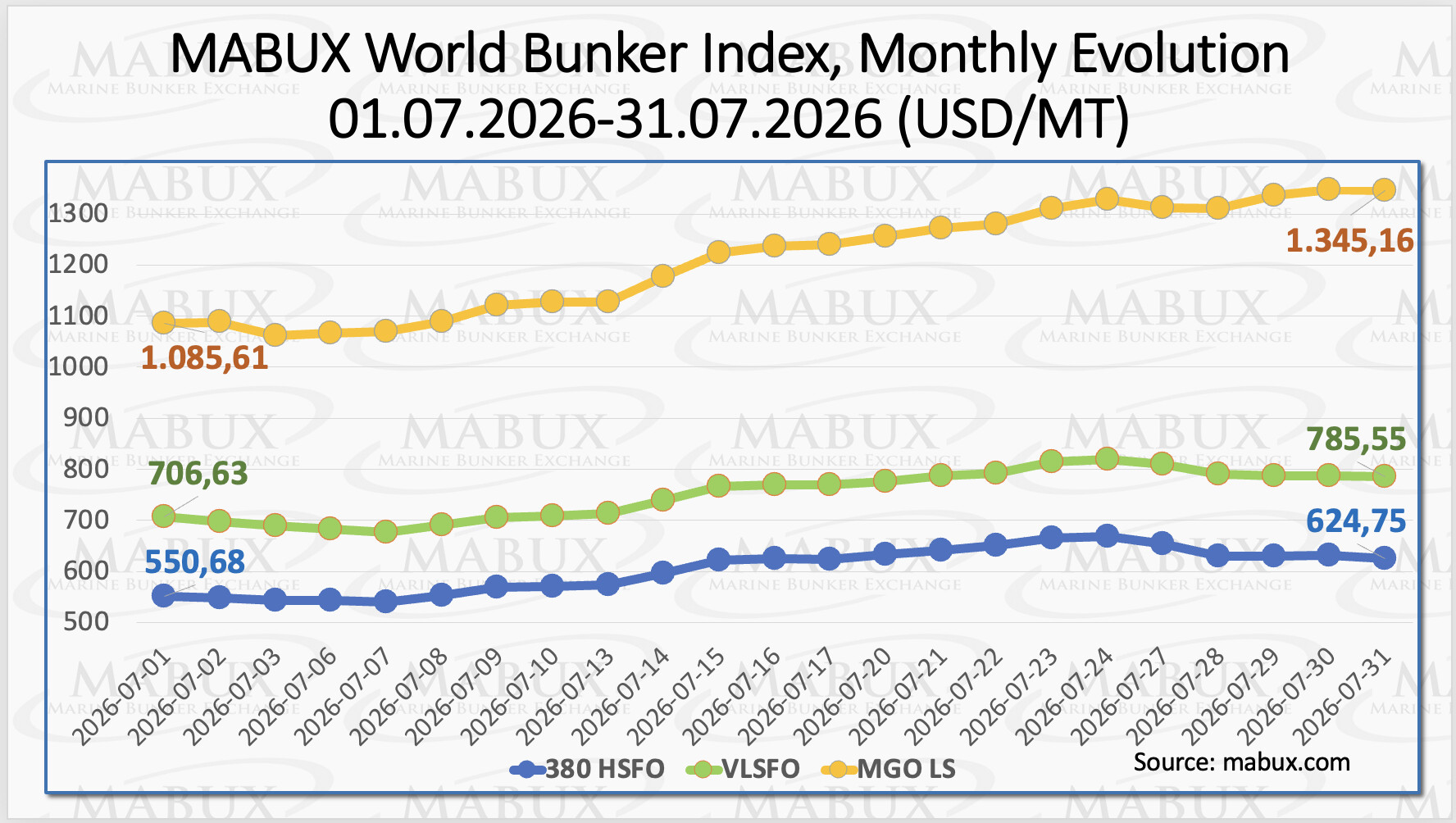

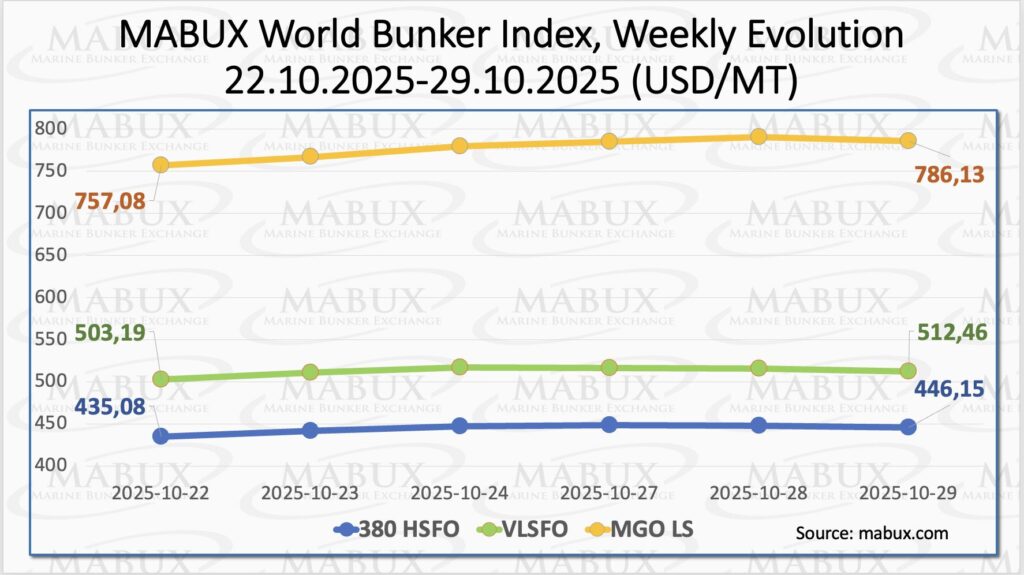
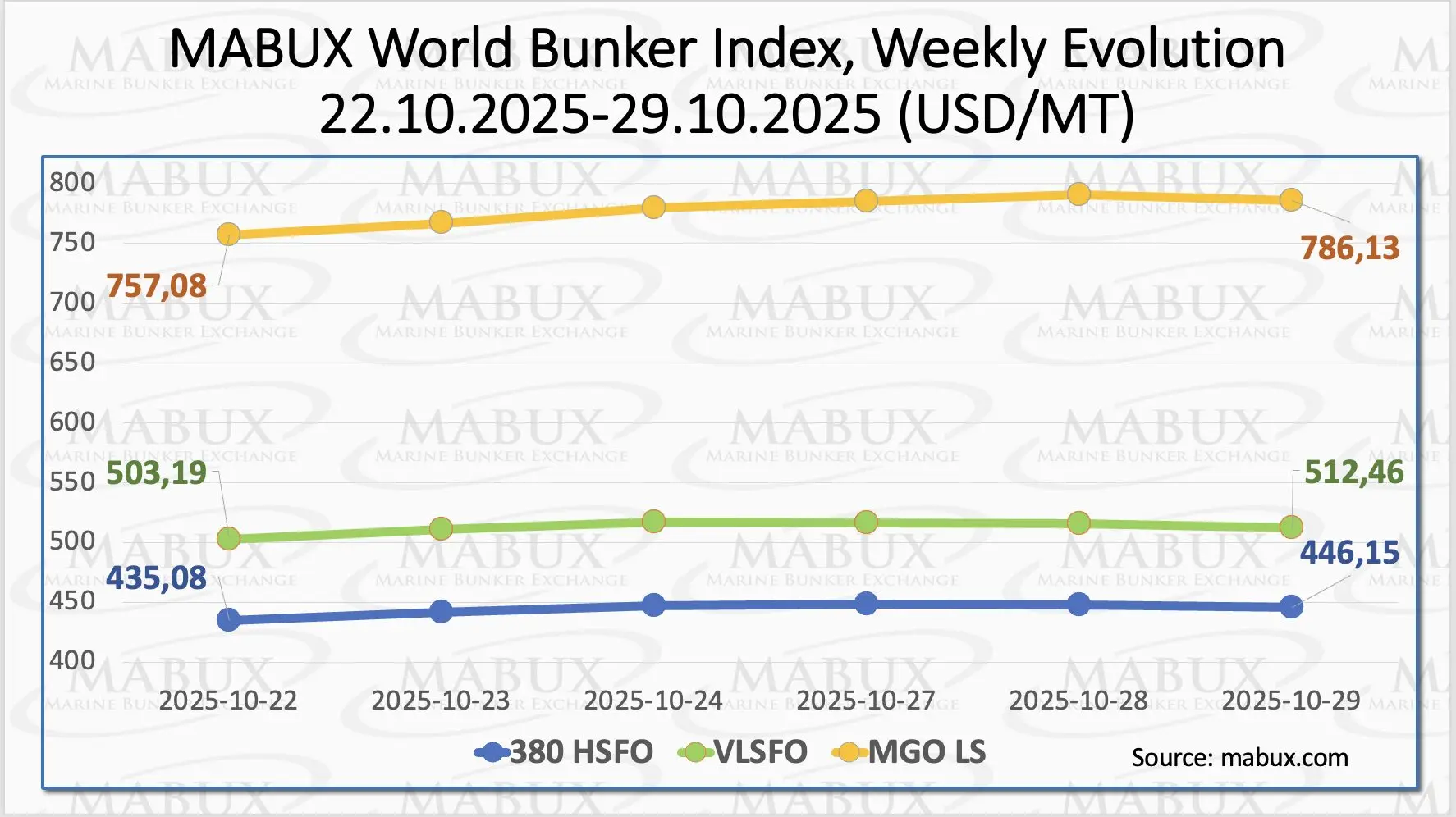
At the close of Week 44, global bunker indices by MABUX demonstrated an overall upward trend. However, by the end of the week, early signs of a downward correction began to emerge. The 380 HSFO index increased by USD 11.07, rising from USD 435.08/MT in the previous week to USD 446.15/MT, once again approaching the USD 450 threshold.
The VLSFO index added USD 9.27, reaching USD 512.46/MT compared to USD 503.19/MT a week earlier. The MGO index also strengthened by USD 29.05, climbing from USD 757.08/MT to USD 786.13/MT. As of the time of writing, the global bunker market showed no clear price dynamics, with movements remaining moderate and mixed across key fuel grades.
The MABUX Global Scrubber Spread (SS) — the price difference between 380 HSFO and VLSFO — continued to narrow, declining by $1.80 (from $68.11 last week to $66.31), and remained consistently below the psychological threshold of $100.00 (SS breakeven level). In contrast, the average weekly value of the index showed a marginal increase of $0.83. In Rotterdam, the SS Spread also continued to contract, losing $3.00 (down to $23.00 from $26.00 last week).
During the week, the spread temporarily fell to $18.00 — its lowest level since October 2024. The average weekly value in Rotterdam decreased by $4.00. In Singapore, the 380 HSFO/VLSFO price differential slipped by $1.00 (from $63.00 to $62.00), with the weekly average also easing by $1.00.
The downward trend in the SS spread across the global bunker market persists, reinforcing the economic attractiveness of using conventional VLSFO over the HSFO + scrubber combination. No significant changes in SS spread dynamics are anticipated next week. Detailed data and analysis are available in the “Differentials” section at mabux.com.

Electricity generation from gas-fired power plants in the EU increased by almost 50% in the first half of October compared to the same period last year. This significant increase was primarily driven by low hydropower generation (down 28%) and weaker winds, which led to a decline in wind power generation of almost 13% year-on-year.
Increased demand for gas generation led gas storage facilities to switch from injection to withdrawal much earlier than in previous years. This naturally impacted storage accumulation: net gas injections in the first half of October decreased more than tenfold compared to last year.
Wind power generation is becoming a key driver of winter gas demand in Europe, and the impact of wind speed on short-term gas price dynamics is likely to continue to increase in the coming years, as gas-fired power plants play an increasingly important role in the European energy system.
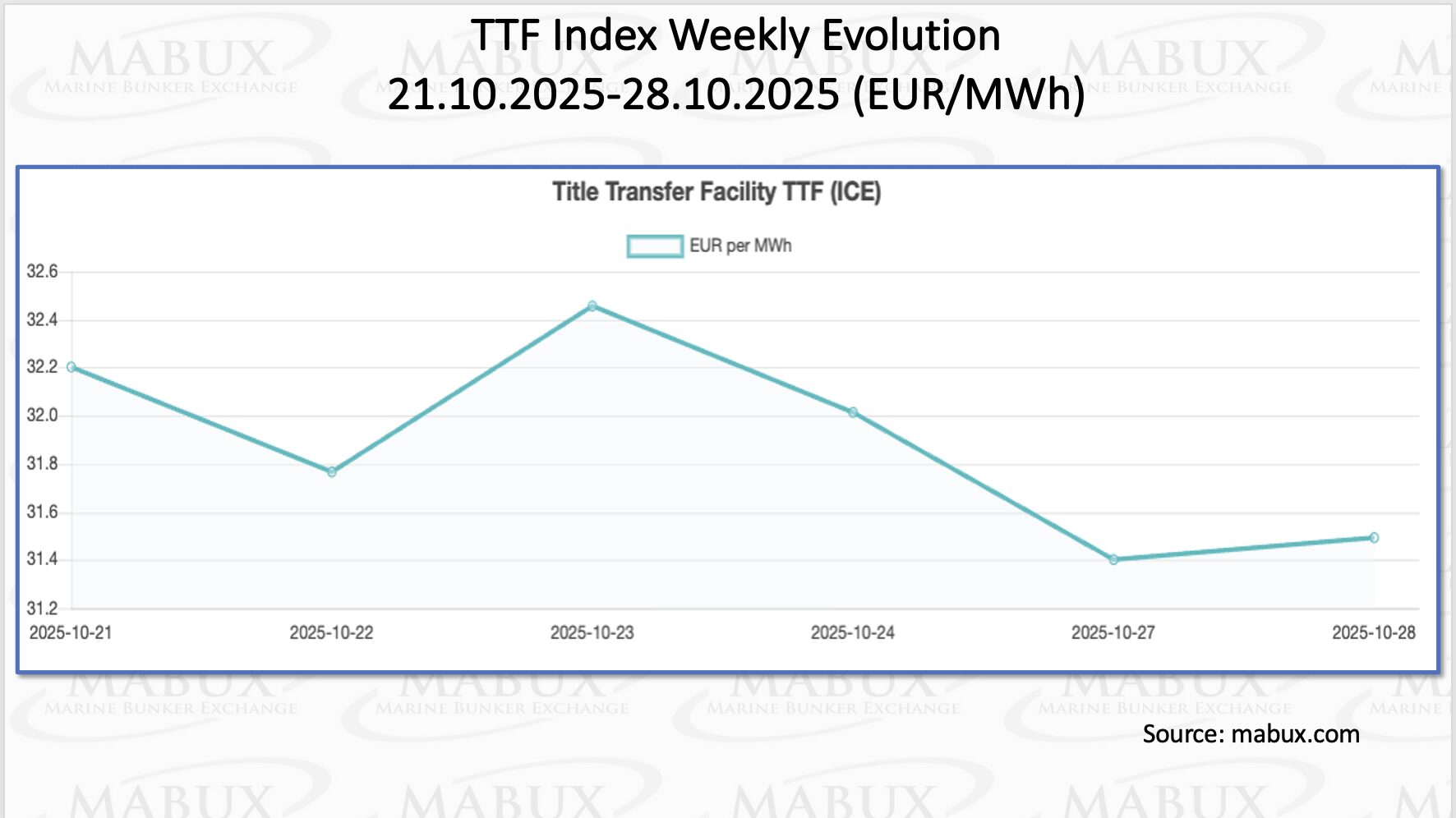
As of October 28, European regional gas storage facilities were 82.85% full, showing a marginal increase of 0.02% compared to the previous week. The storage occupancy rate thus remained virtually unchanged and continues to stand 11.52% higher than the 71.33% level recorded at the beginning of the year. At the close of Week 44, the European TTF gas benchmark declined moderately by €0.706/MWh, down to €31.494/MWh from €32.200/MWh a week earlier.
According to MABUX assessments, the price of LNG as a bunker fuel at the port of Sines (Portugal) continued its moderate upward trend over the week, increasing by USD 10.00 to USD 745/MT, compared to USD 735/MT the previous week. The price differential between LNG and conventional fuel shifted slightly in favor of LNG, standing at USD 40, versus USD 38 in favor of conventional fuel a week earlier.
On the same day, MGO LS was quoted at USD 785/MT at the port of Sines. More detailed information is available in the “LNG Bunkering” section of mabux.com.

At the end of Week 44, the MABUX Market Differential Index (MDI) — representing the ratio of Market Bunker Prices (MBP) to the MABUX Digital Bunker Benchmark (DBP) — reflected the following price trends across the world’s major bunkering hubs: Rotterdam, Singapore, Fujairah, and Houston:

By the end of the week, the balance of overvalued versus undervalued ports shifted further toward undervaluation, as Fujairah became undervalued across all fuel grades. The undervaluation trend is expected to persist in the global bunker market over the coming week.
More detailed information on the correlation between market prices and the MABUX digital benchmark is available in the Digital Bunker Prices section on mabux.com.
According to Lansdowne Moritz, total global demand for LNG as a marine fuel will reach approximately 4 million tonnes in 2025, up 53.8% from 2.6 million tonnes in 2024. The largest growth is seen in Asia, whose share of global demand increased to 47% in the first three quarters of 2025, compared to 45% for the full year 2024.
This rise in Asia’s market share comes despite the incentives introduced under the FuelEU Maritime program—which, all else being equal, should stimulate increased LNG consumption in Europe—the expansion of the European LNG bunkering fleet (now 23 vessels, up from 13), and the average discount of LNG trading prices in Europe of approximately $0.7/MMBtu.
China, Singapore, and the Netherlands together accounted for over 50% of total global LNG bunkering demand in 2025. China remained the largest single market, with a 24% share, up from 16% in 2024. This dominant position is largely due to the high number of container ships calling at Chinese ports, combined with temporarily low gas prices and oversupply—factors that may ease as market conditions stabilize.
The Port of Rotterdam recorded 701,045 m³ of LNG fuel delivered in the first three quarters of 2025, a 3.4% year-on-year increase. Meanwhile, Singapore reported 401,200 tonnes of LNG fuel sales over the same period, representing an 18.8% year-on-year rise.
We believe that, despite the emerging signs of a downward correction, the upward trend in bunker prices is likely to maintain its potential in the coming week.
Source: MABUX