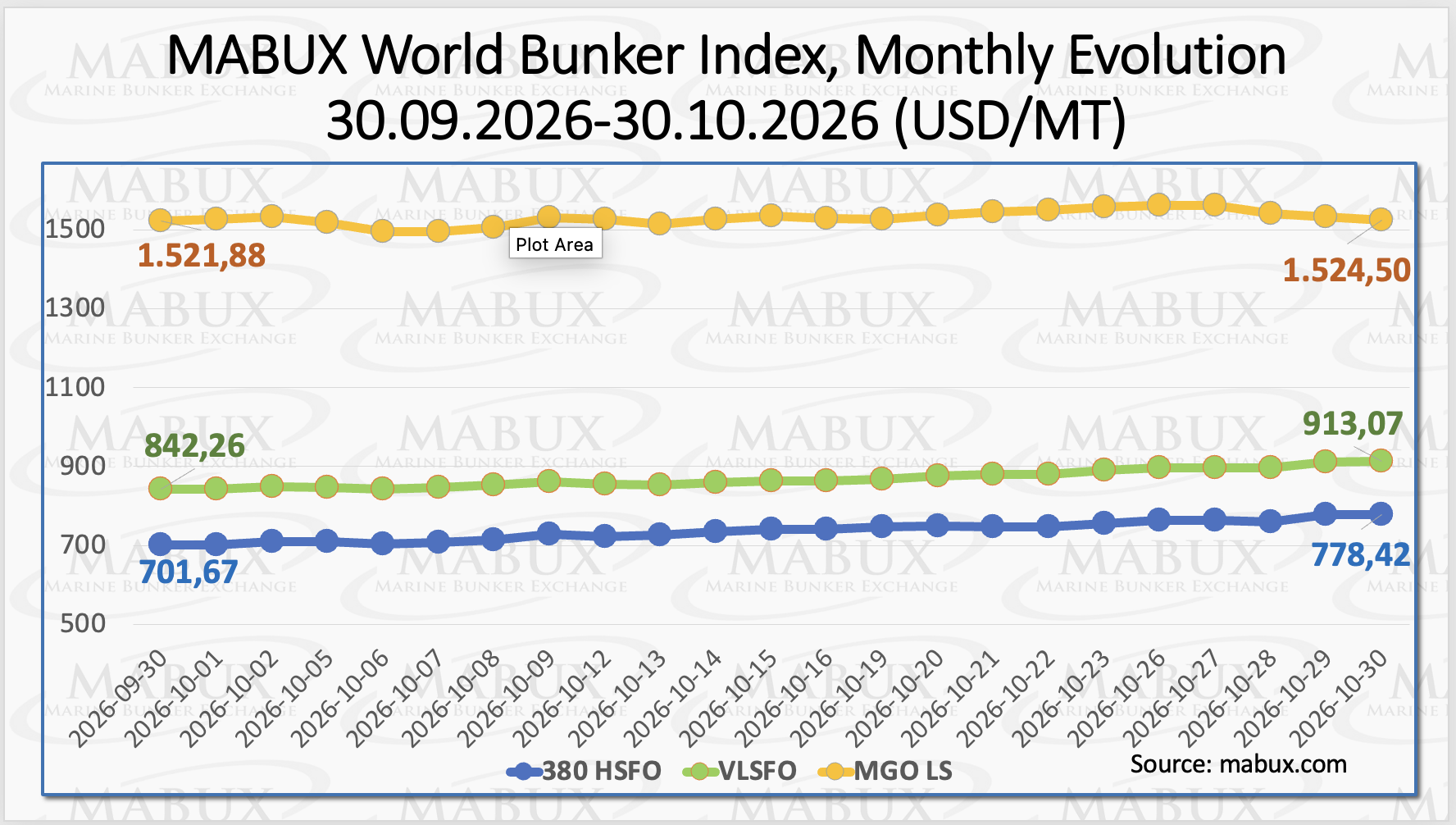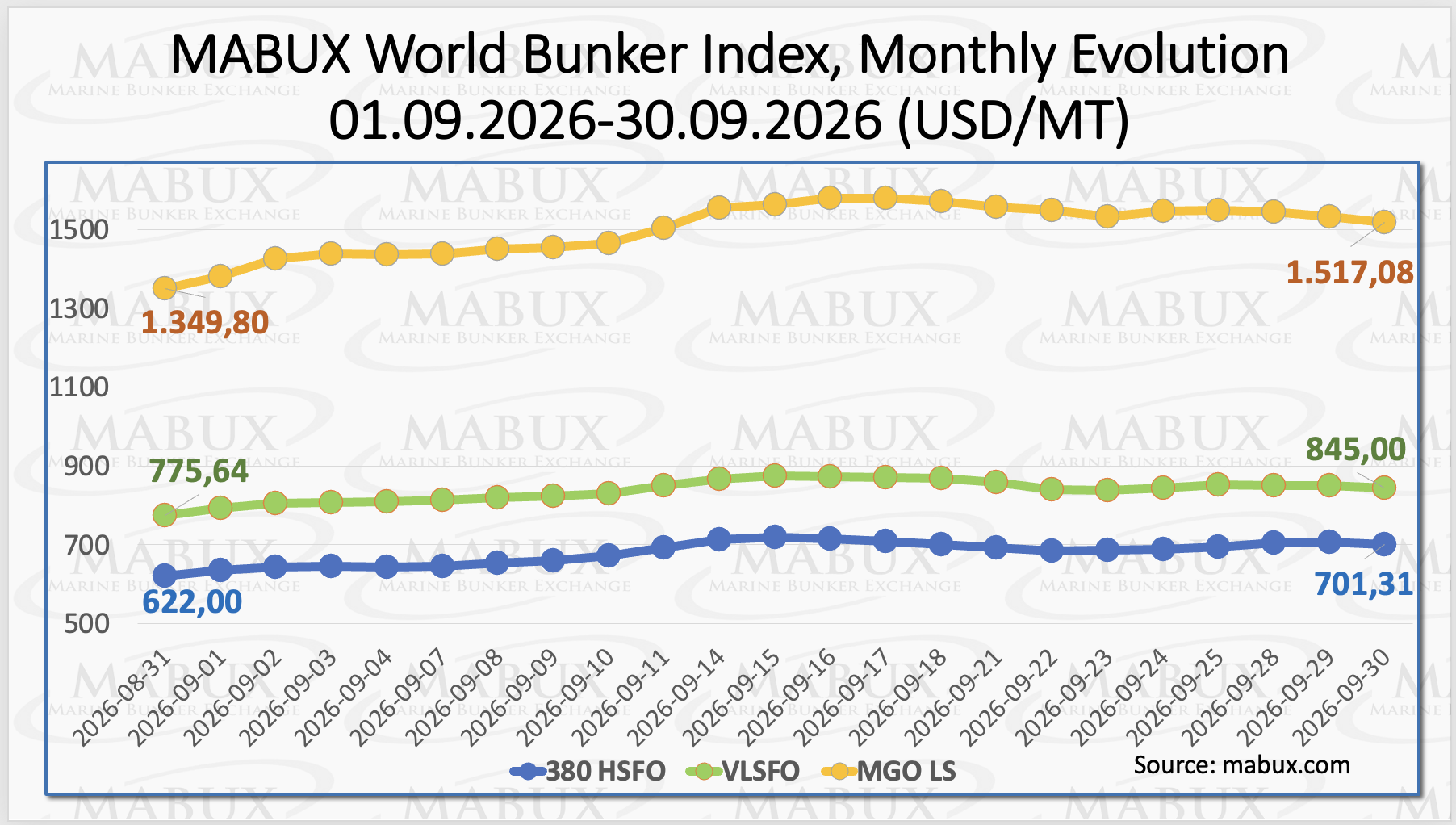

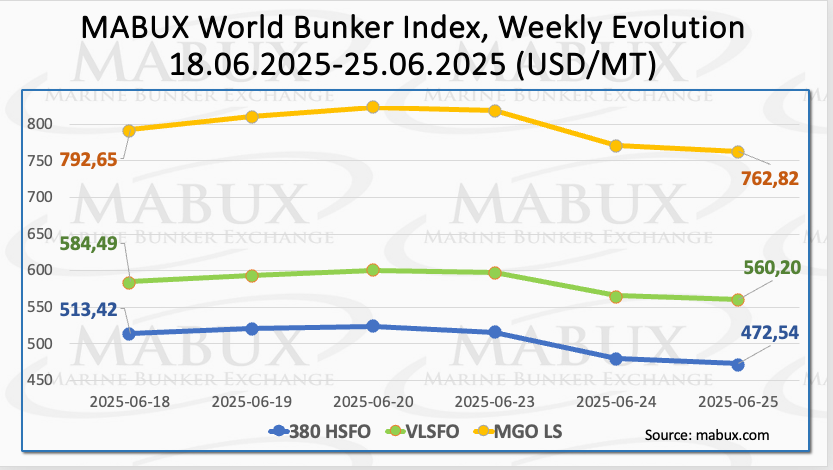
Global bunker indices tracked by MABUX fell sharply in Week 26, driven by expectations that a ceasefire between Israel and Iran will ease concerns over potential oil supply disruptions in the Middle East. The 380 HSFO index dropped by USD 40.88, falling below the USD 500.00 mark to USD 472.54/MT (down from USD 513.42/MT the previous week).
The VLSFO index declined by USD 24.29 to USD 560.20/MT, compared to USD 584.49/MT last week. Meanwhile, the MGO index lost USD 29.83, falling from USD 792.65/MT to USD 762.82/MT. At the time of writing, the global bunker market was undergoing an upward correction.
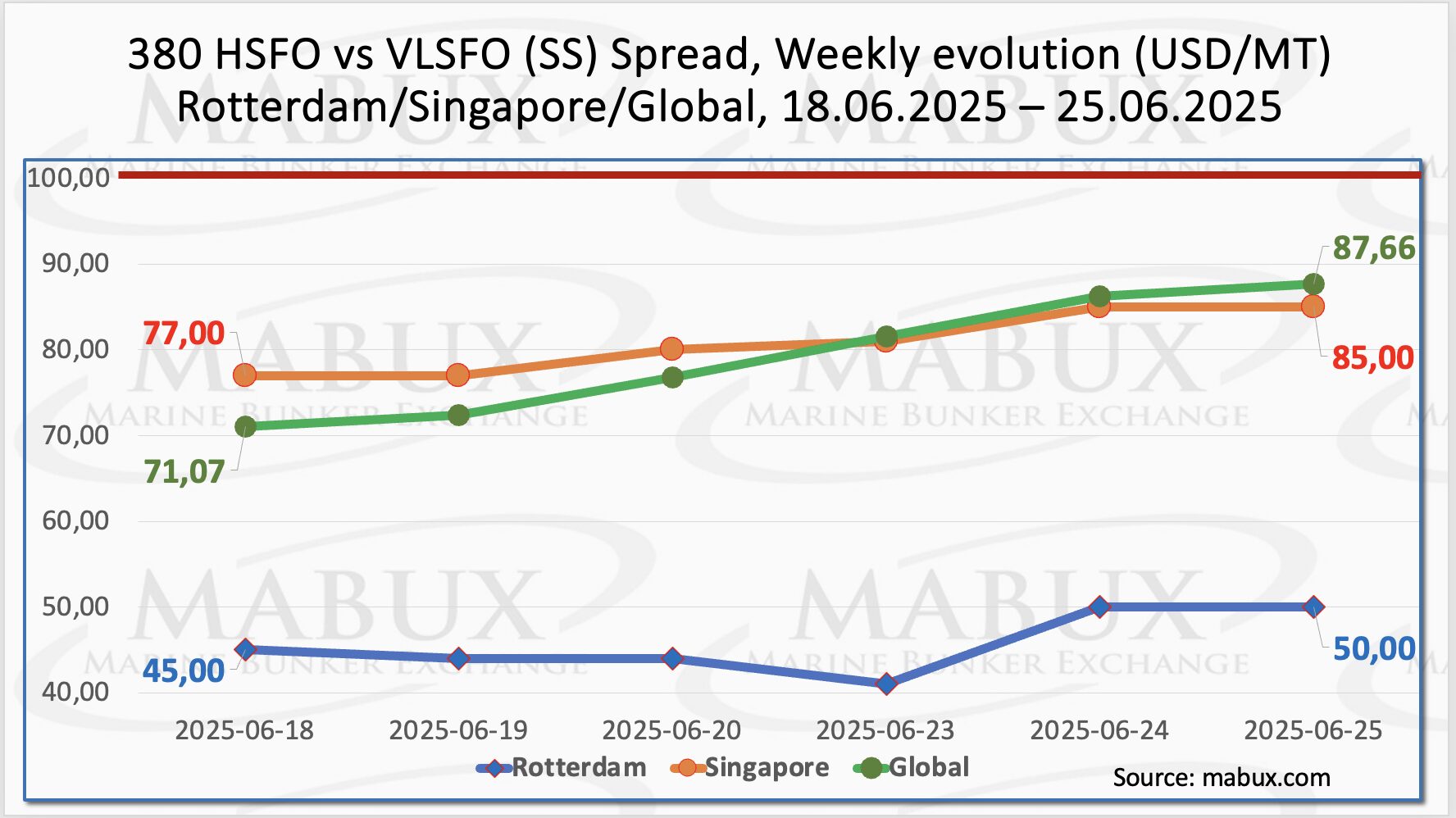
The MABUX Global Scrubber Spread (SS)—the price difference between 380 HSFO and VLSFO—rose by $16.59 in Week 26, climbing from $71.07 to $87.66 and breaking the $80.00 threshold. The weekly average also increased by $5.76.
In Rotterdam, the SS spread edged up by $5.00, reaching $50.00 from $45.00 last week. However, the port’s weekly average declined by $6.50. In Singapore, the spread widened by $8.00—from $77.00 to $85.00—also surpassing the $80.00 mark.
The weekly average in the port rose slightly by $1.50. Overall, the global bunker market is showing signs of renewed growth in SS indices, largely driven by continued high market volatility. However, with SS Spread values still below the $100.00 breakeven point, conventional VLSFO remains the more cost-effective option compared to 380 HSFO with scrubber use.
A moderate upward trend in SS Spread indices is expected to continue into next week. For further details, visit the Differentials section at mabux.com.
 The International Energy Agency (IEA) reports that greenhouse gas emissions from the liquefied natural gas (LNG) supply chain could be cut by over 60% using existing technologies. Currently, global LNG-related emissions total approximately 350 million tonnes of carbon dioxide equivalent (MtCO2e) annually—about 70% of which is CO₂ from flaring and venting, with the remaining 30% being unburned methane.
The IEA highlights that curbing methane leaks alone could reduce emissions by nearly 90 MtCO2e per year, or 25% of total LNG emissions, with half of this achievable at no net cost. Additionally, cutting flaring at LNG plants and gas fields could reduce emissions by another 5 MtCO2e annually.
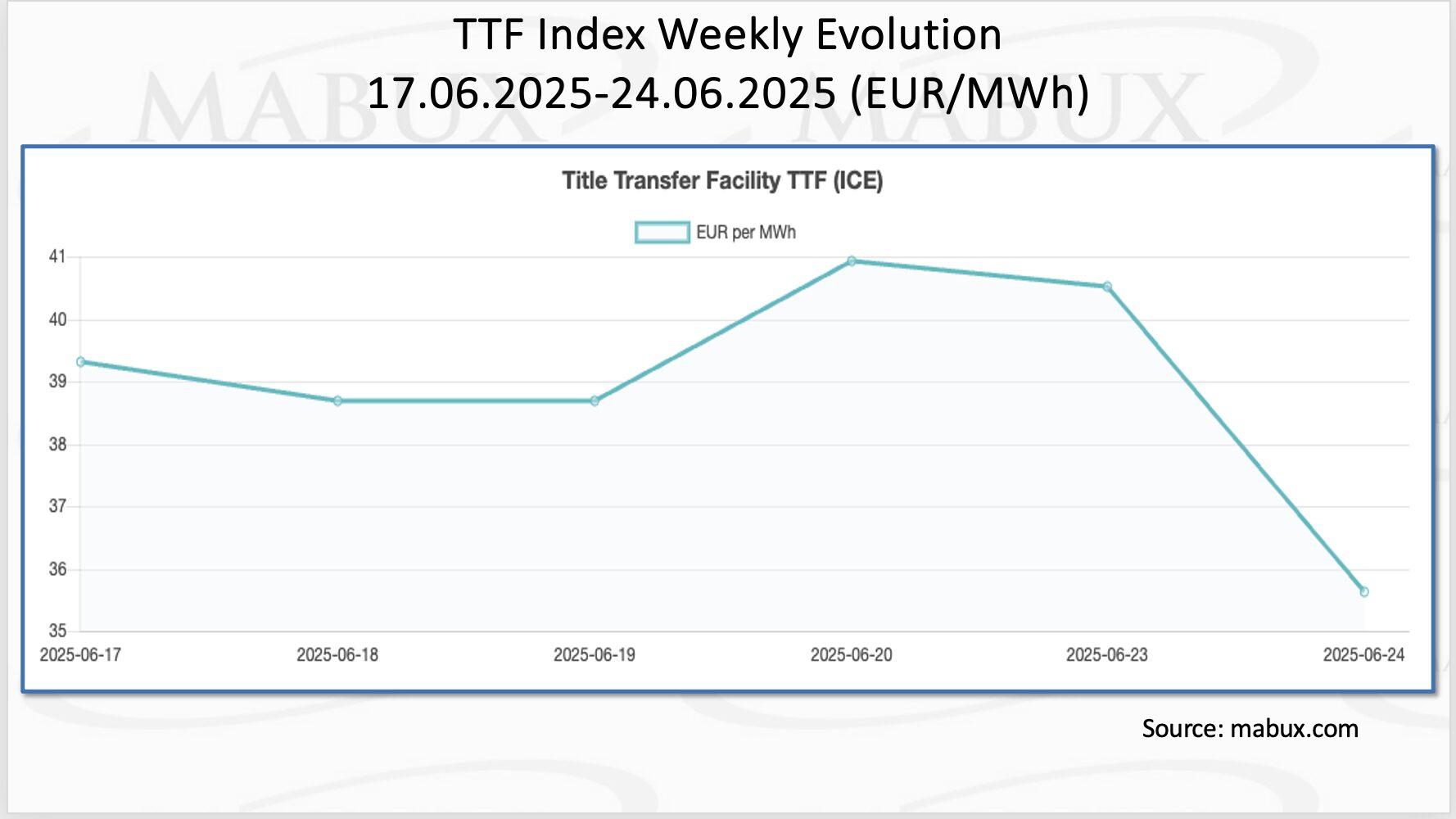
As of June 24, European regional gas storage facilities were 56.59% full—an increase of 2.54% from the previous week, but down 14.74% compared to the beginning of the year (71.33%). The EU continues its gradual efforts to refill gas storage. By the end of Week 26, the European gas benchmark TTF posted another decline, dropping by €3.694/MWh to €35.615/MWh, compared to €39.309/MWh the previous week.
 The price of LNG as a bunker fuel at the port of Sines (Portugal) continued its upward trend by the end of the week, increasing by USD 55 to reach USD 914/MT, compared to USD 839/MT the previous week. Simultaneously, the price gap between LNG and conventional fuel widened on June 23, reaching USD 111 in favor of conventional fuel—up from USD 83 a week earlier.
On the same day, MGO LS was quoted at USD 803/MT in Sines. More detailed information is available in the LNG Bunkering section at mabux.com.
 At the end of Week 26, the MABUX Market Differential Index (MDI)—which reflects the ratio between market bunker prices (MBP) and the MABUX Digital Bunker Benchmark (DBP)—indicated undervaluation across all fuel types in all four key ports: Rotterdam, Singapore, Fujairah, and Houston:
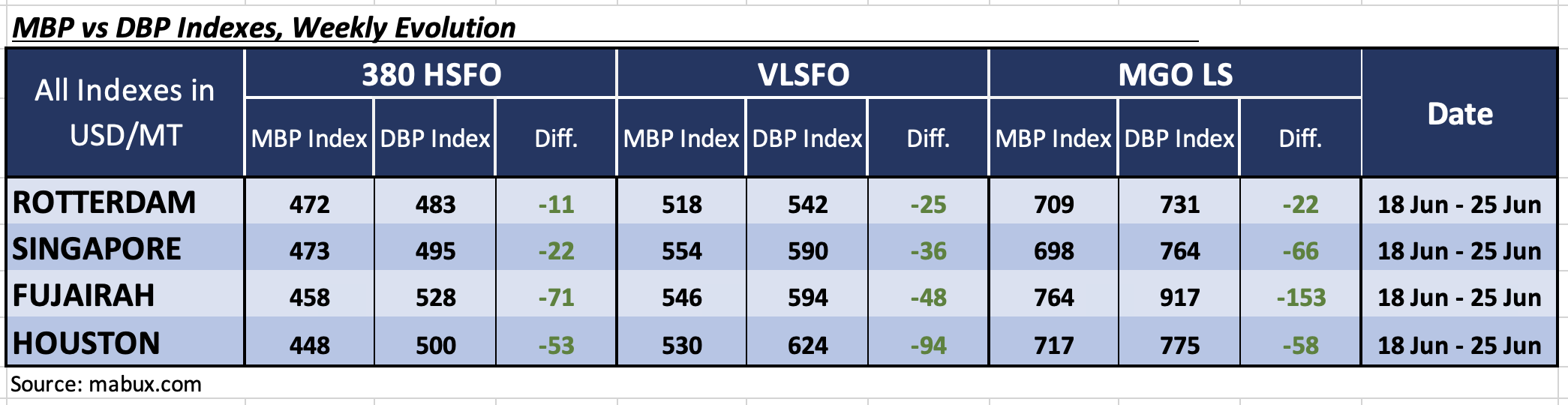 This week marked a complete shift in the overvalued/undervalued structure, with all segments and ports now falling into the undervalued zone. We expect the trend of bunker fuel undervaluation to persist into next week.
For detailed insights on the correlation between market prices and the MABUX Digital Benchmark, please visit the “Digital Bunker Prices” section at mabux.com.
A BIMCO survey conducted during the Tanker Safety Network online meeting on 12 June revealed that more than half (52%) of respondents identified ammonia as the most likely alternative bunker fuel by 2040. Regarding operational challenges, 38% cited fuel compatibility issues, while 28% pointed to onboard safety risks.
When asked about their readiness for alternative fuels, 69% said they were only tentatively prepared, with plans in place but operational options still under investigation. Opinions on nuclear power were divided, though 52% of respondents viewed it as a viable option—albeit one hindered by strict adoption and regulatory conditions.
Summarising the findings, BIMCO noted a shared concern across the shipping industry: although decarbonisation is inevitable, current safety systems and training frameworks are struggling to keep pace with the sector’s evolving demands.
We believe that, given the continued high volatility in the global bunker market, significant and multidirectional price fluctuations may persist without a clear trend. However, should the situation in the Middle East stabilize further, a renewed upward movement in global bunker indices is likely.
Source: MABUX