El Niño is reshaping maritime trade as climate volatility affects shipping routes, port operations, commodity production and the cost of transporting goods.
Forecasts of El Niño conditions during the second half of 2026 have renewed concerns about disruption across maritime supply chains already facing geopolitical and economic uncertainty.
The Panama Canal illustrates the potential consequences.
During the drought of 2023 and 2024, the Panama Canal Authority reduced daily vessel transits from approximately 36 to 22, while considering a further reduction to 18. Ships faced longer waiting times, higher transit costs and restrictions on the amount of cargo they could carry, prompting some operators to use longer alternative routes.
The Panama Canal illustrates the potential consequences. During the drought of 2023 and 2024, the Panama Canal Authority reduced daily vessel transits from approximately 36 to 22, while considering a further reduction to 18. Ships faced longer waiting times, higher transit costs and restrictions on the amount of cargo they could carry, prompting some operators to use longer alternative routes.
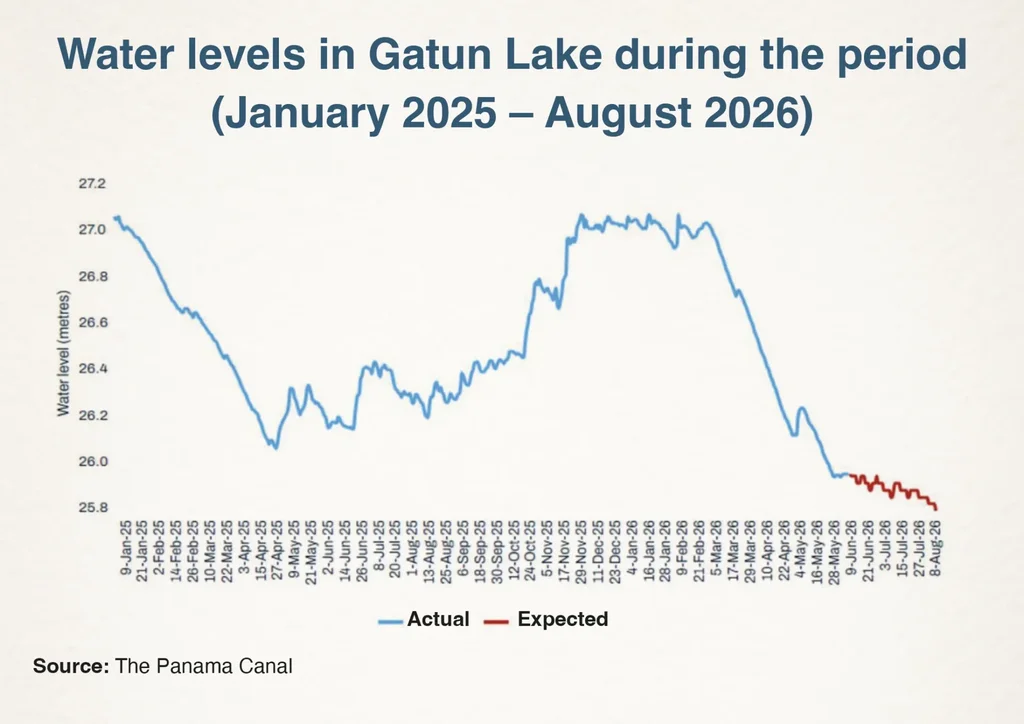
Similar constraints could return if El Niño reduces rainfall and lowers the water level in Gatun Lake, the canal’s principal freshwater source. Lower water levels can force the authority to restrict vessel drafts and daily transit numbers. However, water-saving measures and investment in additional storage capacity should improve the canal’s ability to withstand future droughts.
The effects would extend beyond individual shipping corridors. Higher temperatures and reduced rainfall could increase Asian electricity demand while limiting hydropower generation. This could support additional thermal coal imports by India, China and other Asian markets, increasing demand for Panamax and Kamsarmax vessels.
Agricultural trade could experience more complicated changes. Lower rainfall may reduce wheat production and exports from Australia while encouraging importers to seek supplies from Europe, the Black Sea, Argentina and North America.
India could require additional imports of grains, vegetable oils, legumes and fertilisers, while disruption in Indonesia and Malaysia could alter palm oil trade.
These changes may increase tonne-mile demand even where overall cargo volumes decline, as commodities travel greater distances between alternative suppliers and importing markets.
Ports also face direct exposure to flooding, storms and drought. Infrastructure damage, operational interruptions and temporary closures could affect facilities across South America, Southeast Asia, Australia and the western United States.
The article identifies three possible longer-term responses: recurring restrictions across vulnerable maritime corridors; greater investment in reservoirs and water-management infrastructure; and a broader restructuring of trade networks around alternative routes.
In each case, climate resilience, early-warning systems and flexible supply chains will become increasingly important to the continuity of global maritime trade.
Source: Dr Anas Gaballah, How El Niño is Reshaping Maritime Supply Chains, Future Center for Advanced Research and Studies, 29 June 2026.