
“Ports that adapt to new energy realities will thrive, while those that hesitate risk being left behind,” note Michiel Nijboerand and Jonas Hendriksen of Haskoning, authors of the full article Ports at the Heart of Europe’s Energy Transition.
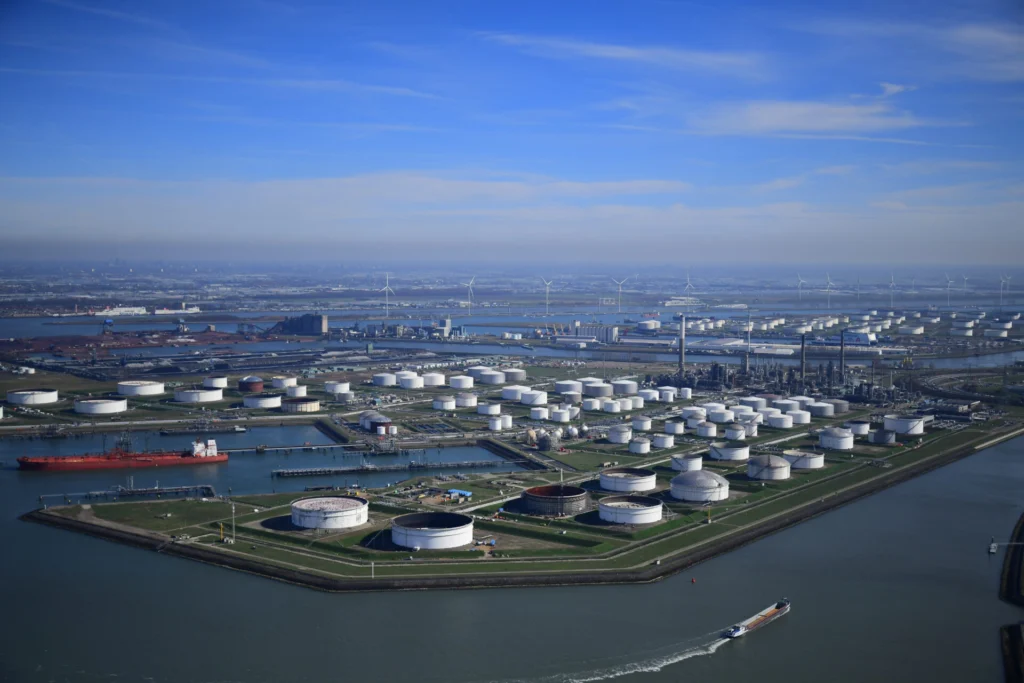
European ports stand at the frontline of the continent’s energy transformation. Once dominated by oil, coal, and gas imports, they now face a defining moment as Europe targets more than 90% renewable electricity by 2050.
Their role is shifting from gateways for fossil fuel imports to strategic hubs for clean energy, connecting offshore wind, hydrogen, and electrified industries.
Chart 1: European Energy Imports
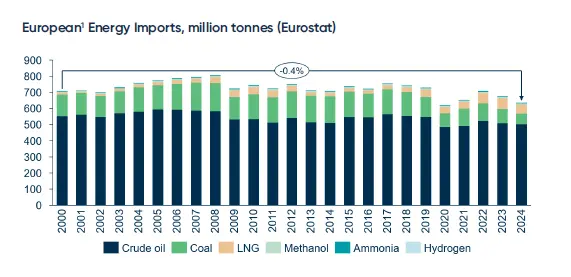
This transition is already reshaping trade flows, infrastructure investment, and industrial strategy.
“Ports such as Rotterdam, Antwerp, and Sines are positioning themselves as integrated energy ecosystems—hosting electrolysers, offshore wind connections, and renewable fuel corridors.”
Projects like Zeevonk II in Rotterdam, combining offshore wind, solar, and hydrogen production, illustrate how tomorrow’s ports will anchor Europe’s clean-energy economy.
Yet success depends on decisive local action—streamlined permitting, stronger grid connections, and long-term investment certainty.
Chart 2: Europe’s Energy Demand
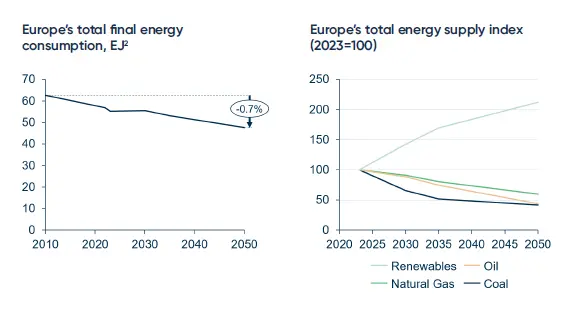
For Europe’s ports, this is both a challenge and an opportunity: to once again reinvent themselves as indispensable nodes in the continent’s future energy system.
Read the full article: “Ports at the Heart of Europe’s Energy Transition”